A beautiful garden doesn’t have to become a second full-time job.
If you love the look of a lush, mature landscape but don’t want to spend every weekend pruning, watering, fertilizing, and fighting pests, shrubs can be some of the smartest plants to add to your garden.
The right shrub can provide structure, flowers, foliage, fragrance, berries, or even winter interest while asking surprisingly little in return.
Of course, “low-maintenance” doesn’t mean you can plant something and completely forget about it. Every shrub needs the basics: appropriate planting conditions, enough water while establishing, occasional pruning, and a layer of mulch when useful.
The difference is that these plants generally don’t demand constant attention once they’re established.
Here are eight dependable shrubs worth considering if you want a garden that looks cared for without requiring endless work.
What Makes a Shrub Truly Low-Maintenance?
Before choosing a shrub, it’s worth looking beyond a pretty flower or attractive leaf.
The best low-maintenance shrubs tend to have several useful characteristics.
They tolerate periods of dryness
Shrubs that cope well with dry conditions are particularly helpful for gardeners who don’t want to water constantly.
Once established, some varieties can handle short periods without irrigation, although newly planted shrubs still need regular watering while their roots develop.
They don’t need constant pruning
A shrub that naturally maintains a pleasant shape is much easier to live with than one that needs trimming every few weeks.
Light, occasional pruning is usually all that’s necessary.
They handle ordinary garden conditions
Some shrubs are remarkably forgiving about soil, temperature, pollution, or exposure.
Choosing a plant suited to your climate and soil from the beginning can eliminate a huge amount of future frustration.
They offer more than one season of interest
Flowers are wonderful, but foliage, fragrance, berries, colorful stems, and autumn color can keep a shrub interesting long after the blooms disappear.
With that in mind, let’s look at some excellent options.
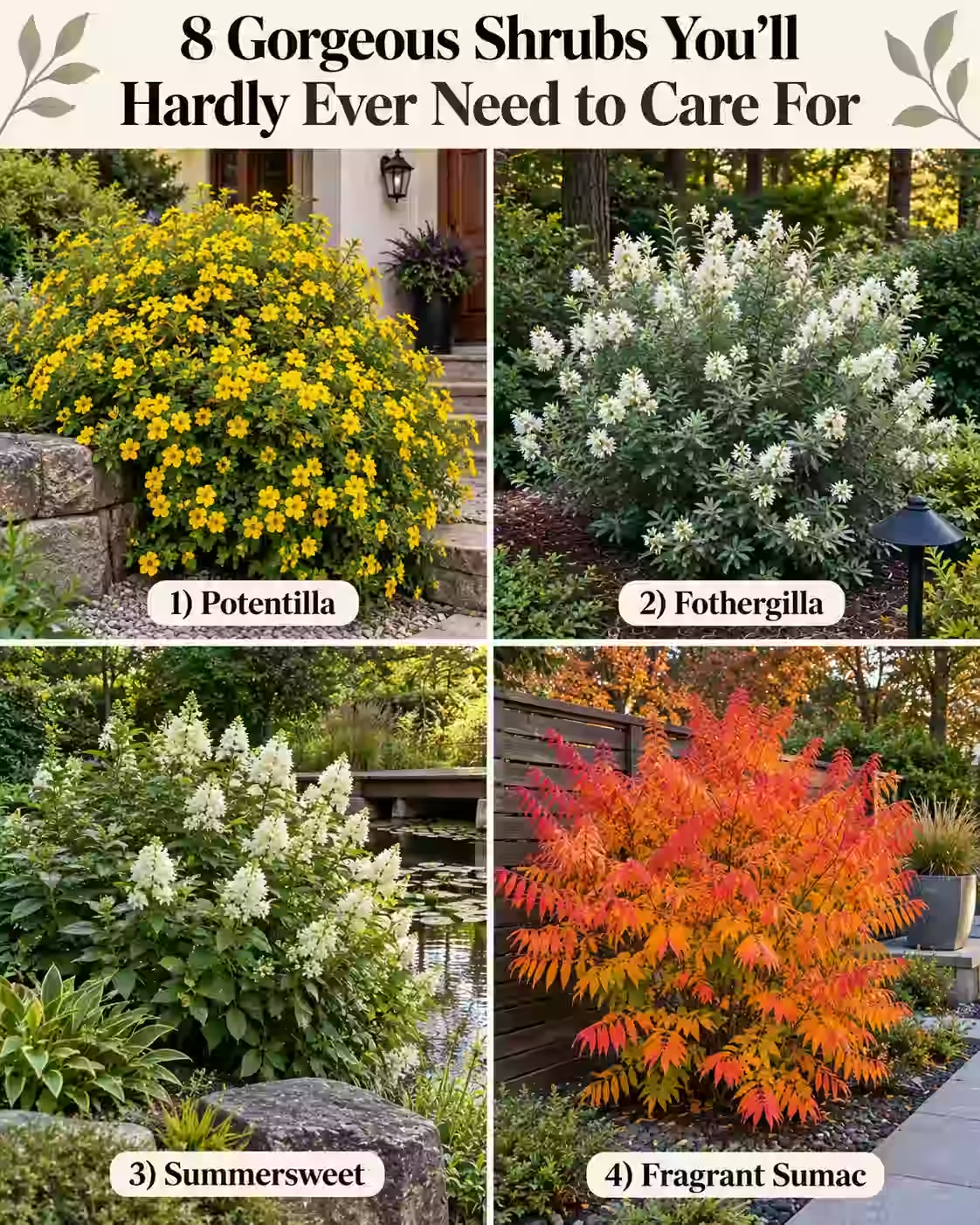
1. Potentilla
Botanical name: Potentilla fruticosa
If your garden conditions aren’t exactly perfect, potentilla is one shrub worth putting on your shortlist.
It is remarkably adaptable and is generally hardy across USDA Zones 2 through 8.
Potentilla is especially useful for gardeners who want a flowering shrub without signing up for a demanding maintenance routine.
Depending on the variety, it can produce cheerful flowers throughout a long portion of the growing season. Some cultivars also naturally shed spent blooms, reducing the need for constant deadheading.
It can tolerate challenging conditions, including periods of drought once established, and generally doesn’t require elaborate care.
Why grow potentilla?
- Handles cold conditions well
- Tolerates periods of dryness
- Produces flowers for an extended season
- Usually needs only light pruning
- Works well in informal and structured landscapes
If you want a compact flowering shrub that doesn’t need to be pampered, potentilla is a strong candidate.
2. Fothergilla
Botanical name: Fothergilla major and Fothergilla gardenii
Fothergilla is proof that a low-maintenance shrub doesn’t have to be boring.
This shrub is especially suited to USDA Zones 5 through 8 and offers several seasons of visual interest.
In spring, unusual bottlebrush-like flowers appear before or around the time the foliage develops. Later in the year, the leaves can provide attractive autumn color.
Fothergilla also has a relatively controlled growth habit, meaning you aren’t constantly battling an oversized shrub that has taken over its planting space.
It is also known for having relatively few pest problems.
Why grow fothergilla?
- Beautiful spring flowers
- Attractive fall foliage
- Relatively slow and manageable growth
- Generally resistant to many common pest problems
- Provides interest beyond a single season
Give it the right growing conditions and it can become one of those plants you barely need to think about.
3. Summersweet
Botanical name: Clethra alnifolia
If fragrance matters to you, don’t overlook summersweet.
This shrub is generally hardy in USDA Zones 4 through 9 and is particularly useful when you want a plant that can tolerate less-than-perfect soil conditions.
Its biggest attraction arrives in summer, when clusters of fragrant flowers appear.
The scent is one of the reasons summersweet is such a lovely addition to a garden near a patio, walkway, or seating area. You don’t have to walk directly through the shrub to enjoy it.
The flowers can also attract pollinators, making summersweet useful for gardeners who want to create a more wildlife-friendly landscape.
Why grow summersweet?
- Fragrant summer flowers
- Tolerates a range of soil conditions
- Works in cooler and warmer climates
- Attractive to pollinators
- Doesn’t require constant grooming
If you want a shrub that contributes both beauty and fragrance, summersweet deserves attention.
4. Fragrant Sumac
Botanical name: Rhus aromatica
Fragrant sumac is an excellent choice for gardeners who prefer tough, adaptable plants.
It can grow across a broad range of conditions, roughly USDA Zones 3 through 9, and once established it can handle situations where more delicate shrubs might struggle.
Its foliage is dense and aromatic, giving the plant an extra dimension beyond its basic shape.
Another useful characteristic is its natural spreading habit. This can make it helpful for filling larger areas or creating a more natural-looking planting.
However, that same spreading tendency means you should give it enough room from the beginning.
Why grow fragrant sumac?
- Extremely adaptable
- Handles dry conditions once established
- Attractive dense foliage
- Naturally spreads to cover space
- Requires relatively little routine care
It is particularly appealing if your gardening philosophy is more “plant smart and work less.”
5. Ninebark
Botanical name: Physocarpus opulifolius
Ninebark is one of those shrubs that can look impressive without requiring a complicated maintenance schedule.
It is hardy across a wide range, approximately USDA Zones 2 through 8, making it suitable for many colder climates as well as moderate growing regions.
The plant develops attractive foliage and produces flowers in spring.
Its toughness is one of its biggest advantages. Ninebark generally isn’t a shrub that needs to be constantly monitored for every little problem.
Pruning is usually straightforward, especially when the goal is simply to maintain its size and shape.
Why grow ninebark?
- Very cold hardy
- Adaptable to different garden conditions
- Attractive foliage
- Spring flowers
- Generally low-maintenance
- Doesn’t require frequent trimming
If you want a substantial shrub that can provide structure without becoming overly demanding, ninebark is worth considering.
6. Glossy Abelia
Botanical name: Abelia × grandiflora
For gardeners in warmer climates, glossy abelia can be a particularly useful landscape shrub.
It generally performs well in USDA Zones 6 through 9 and is valued for its ability to tolerate dry conditions once established.
The foliage stays attractive for much of the growing season, while its flowers provide additional seasonal interest.
Another benefit is that many glossy abelia varieties are relatively unappealing to deer.
That can be especially useful if browsing animals are constantly turning your garden into their personal buffet.
Why grow glossy abelia?
- Good drought tolerance
- Attractive foliage
- Long-lasting flowering interest
- Useful in warmer climates
- Often avoided by deer
- Doesn’t demand constant maintenance
It can work particularly well as part of a mixed shrub border where you want reliable greenery with seasonal flowers.
7. Beautyberry
Botanical name: Callicarpa spp.
Beautyberry is the shrub to consider if you want something that can bring a little drama to the garden without demanding daily attention.
Different beautyberry species and cultivars have different hardiness ranges, so selecting the correct one for your climate is important.
Its biggest attraction is its colorful berries, which can appear along the stems and create an eye-catching display.
Beautyberry can also provide value for wildlife, making it more than just an ornamental plant.
Some species tolerate less-than-perfect soil and don’t require elaborate care routines once established.
Why grow beautyberry?
- Striking berries
- Wildlife-friendly
- Can tolerate less-than-perfect soil
- Relatively easy to maintain
- Adds interest after many summer flowers have faded
Just remember that “beautyberry” refers to several different plants, so always check the specific species or cultivar before buying.
8. Red-Twig Dogwood
Botanical names: Cornus sericea / Cornus alba
If your garden has areas where soil conditions fluctuate between wet and dry, red-twig dogwood may be worth investigating.
These shrubs are hardy in roughly USDA Zones 3 through 8 and are particularly famous for their colorful stems.
The foliage provides interest during the growing season, while the bare stems can become especially noticeable during winter.
That means this shrub doesn’t simply disappear when the flowers are gone.
It can also tolerate a range of soil moisture conditions, making it useful in locations where other shrubs might struggle.
Why grow red-twig dogwood?
- Excellent cold tolerance
- Handles wet conditions
- Can tolerate periods of dryness
- Attractive foliage
- Colorful stems provide winter interest
- Requires only occasional pruning
For a garden that needs structure during the colder months, few shrubs offer quite the same effect.
How to Make Low-Maintenance Shrubs Even Easier
Choosing an easy-care shrub is only half the equation.
Where and how you plant it can determine whether it actually stays low-maintenance.
Choose the right plant for your climate
A shrub that is perfectly adapted to your region will usually require less intervention than one being pushed far outside its preferred conditions.
Check the plant’s hardiness range before purchasing it.
Don’t ignore mature size
A small shrub at the garden center can eventually become several times larger.
Always check its mature height and width.
Planting shrubs too close together is one of the fastest ways to create future pruning problems.
Mulch around the root zone
A layer of organic mulch can help retain soil moisture and reduce competition from weeds.
Just avoid piling mulch directly against the main stems.
Water deeply while plants establish
Even drought-tolerant shrubs need regular moisture during their first growing season or two.
The goal is to help them establish a strong root system so they become more self-sufficient later.
Prune with a purpose
Don’t automatically trim a shrub simply because it has grown slightly larger.
First decide why you’re pruning.
Are you removing dead branches? Correcting an awkward shape? Controlling size? Removing damaged growth?
Having a reason for every cut can prevent unnecessary pruning.
Which One Should You Choose?
There isn’t one perfect low-maintenance shrub for every garden.
Instead, think about what you want the shrub to accomplish.
Want long-lasting flowers?
Try potentilla.
Want spring flowers and beautiful fall color?
Fothergilla is worth considering.
Want fragrance?
Choose summersweet.
Need a tough shrub for a difficult area?
Fragrant sumac is a strong option.
Want a hardy shrub with attractive foliage?
Ninebark is a great choice.
Live in a warmer, drier region?
Glossy abelia may fit beautifully.
Want berries and wildlife interest?
Consider beautyberry.
Need winter color and structure?
Red-twig dogwood stands out.
The Secret to a Low-Work Garden
A low-maintenance garden isn’t really about doing nothing.
It’s about doing the right things less often.
The biggest mistake is choosing plants based entirely on appearance and then trying to force them to survive in conditions they don’t naturally like.
Instead, start with plants that already match your climate, soil, available sunlight, and moisture levels.
When a shrub is suited to its location, it usually needs less intervention to stay healthy.
That means fewer emergency watering sessions, less pruning, fewer pest problems, and more time simply enjoying the garden.
And that’s ultimately what a low-maintenance landscape should give you: more garden, less work