When summer starts winding down, many gardens suddenly lose their color. Some flowers fade, annuals begin to look tired, and empty patches appear where the garden once felt full and lively.
But October doesn’t have to mean the end of your flower show.
With the right plants—and a little regular deadheading—you can keep bright pinks, oranges, reds, purples, and yellows appearing well into fall. Some of the flowers below can continue until the first frost, while others perform especially well as temperatures begin to cool.
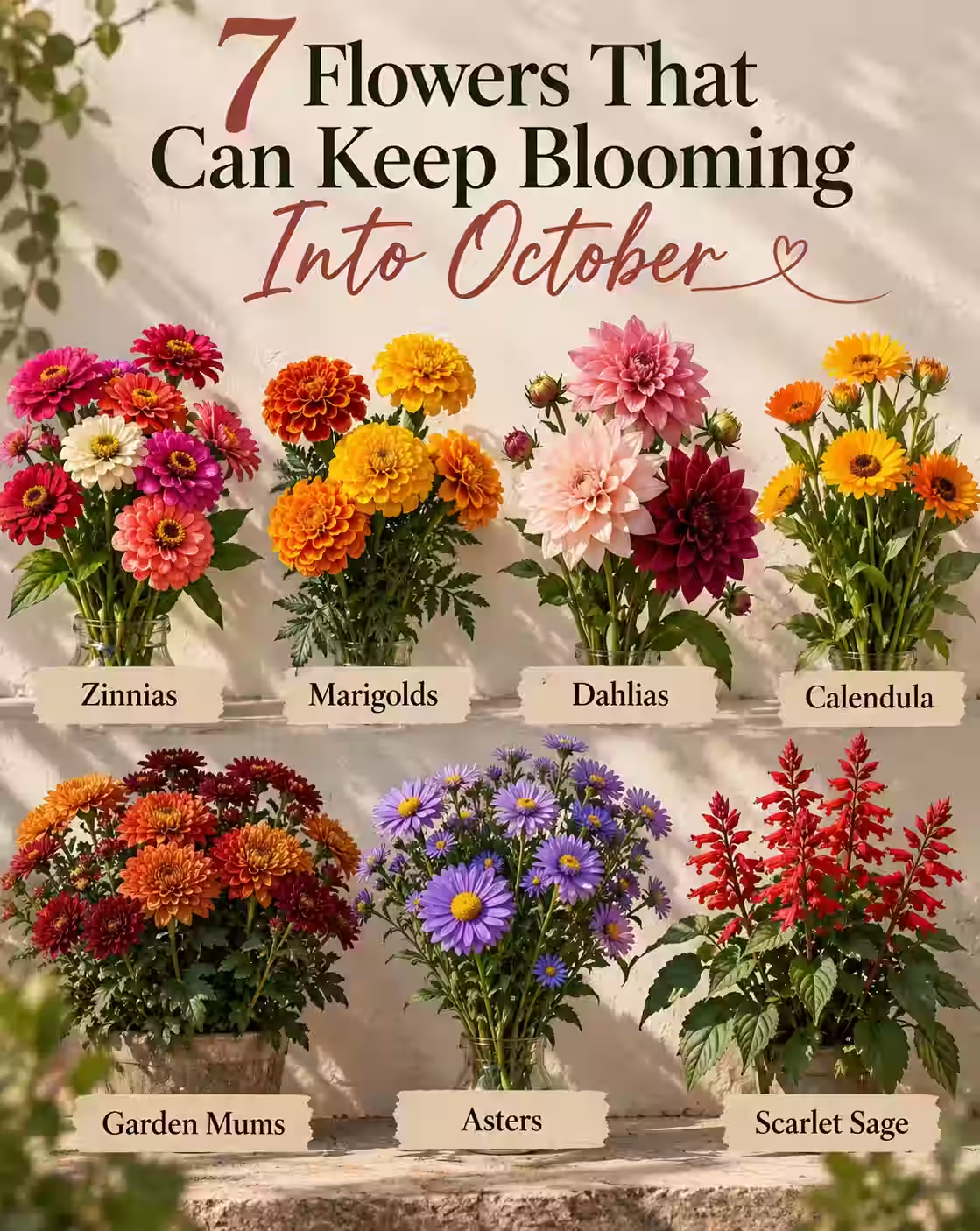
Here are seven beautiful choices to keep in mind.
1. Zinnias
Zinnias are one of the best choices when you want a garden that refuses to give up its summer color.
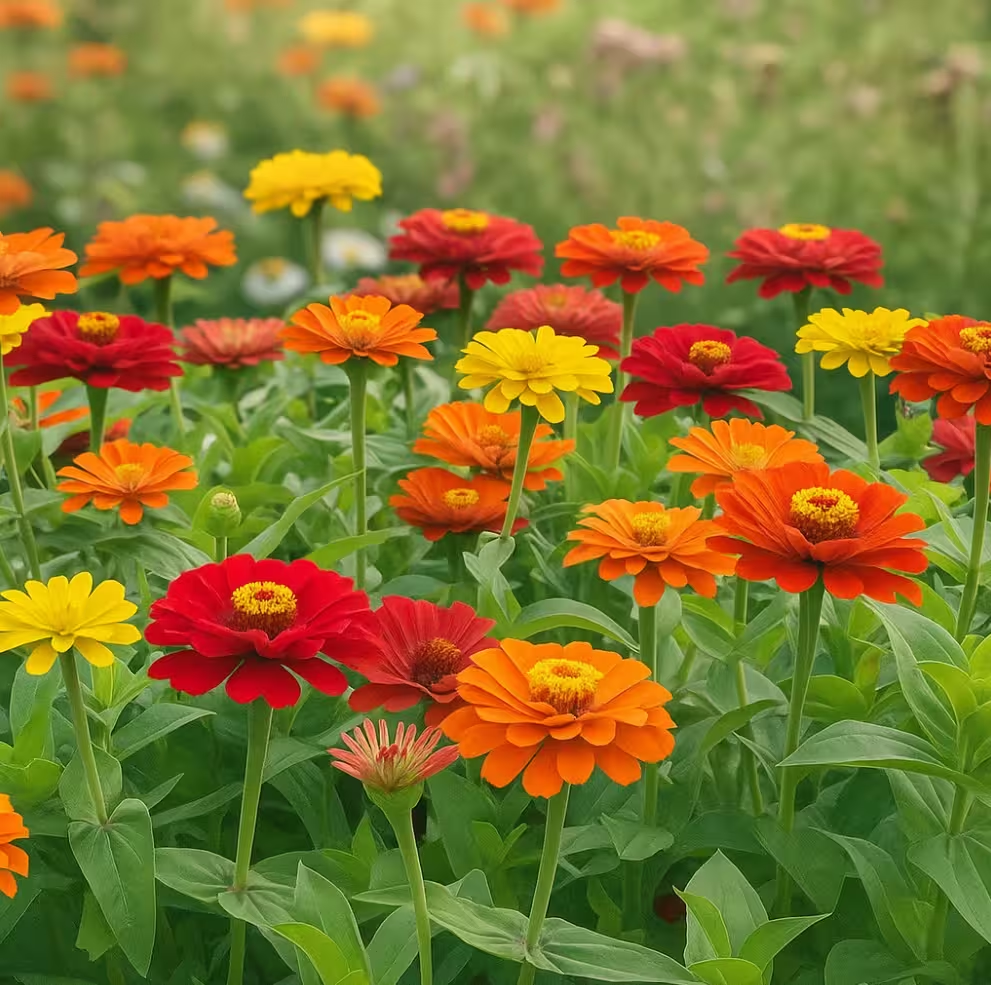
Their cheerful blooms come in almost every warm and bright shade imaginable, including red, orange, yellow, pink, purple, and white. They also make excellent cut flowers, so you can enjoy them indoors as well as outside.
The secret to keeping zinnias flowering for as long as possible is simple: don’t let spent flowers remain on the plant for too long.
Regularly remove faded blooms and the plant can continue producing new flowers instead of putting all its energy into seed production.
Zinnias are tender annuals, so their season eventually ends with freezing temperatures. In a protected, sunny location, however, they can continue providing color surprisingly late in the season.
Best for: sunny flower beds, containers, and cutting gardens.
2. Marigolds
If you want dependable autumn color, marigolds are hard to beat.
Their golden-yellow and orange flowers fit naturally into an autumn garden, but they can also keep the garden looking like summer when everything else begins to fade.
Marigolds prefer plenty of sunlight and reasonably well-drained soil. Keep removing faded flowers throughout the season, and new buds can continue developing.
They’re also wonderfully useful in containers and along garden borders because their compact growth makes it easy to create large blocks of color.
In warmer climates, marigolds can continue flowering well into October and sometimes beyond.
Best for: borders, containers, vegetable gardens, and sunny spots.
3. Dahlias
Few flowers can compete with dahlias for sheer visual impact.
Their large, layered flowers can be dinner-plate huge or relatively small, depending on the variety. Colors range from soft pink and white to fiery orange, deep red, burgundy, and purple.
Dahlias often continue producing flowers through late summer and into fall as long as temperatures remain suitable.
The more frequently you harvest or deadhead the flowers, the more you encourage the plant to keep producing additional blooms.
One thing to remember is that dahlias are not equally winter-hardy everywhere. In colder climates, their tubers generally need protection or storage before hard freezes arrive.
In mild climates, though, the flowering season can extend well into October.
Best for: dramatic borders, containers, and cut-flower gardens.
4. Calendula
Calendula is especially valuable when the weather starts becoming cooler.
While many heat-loving summer annuals begin slowing down, calendula can actually perform very well during the cooler portion of the growing season.
Its daisy-like flowers usually appear in shades of yellow, gold, and orange, giving the garden a warm autumn glow.
Regularly picking or deadheading faded flowers encourages the plant to keep producing more.
Calendula is also a useful choice for gardeners who want something that can transition naturally from late summer into fall rather than having a sudden end to the flowering season.
Best for: borders, containers, cottage gardens, and cooler fall conditions.
5. Garden Mums
When people think about flowers in October, chrysanthemums are usually among the first plants that come to mind.
Garden mums are true fall performers, with flowers available in an enormous range of colors—from golden yellow and bronze to burgundy, pink, purple, and white.
Their flowering is closely connected to shortening day length, which helps explain why they become such a dominant feature in gardens as summer transitions into fall.
For the longest display, keep mums in a sunny location and don’t allow their shallow roots to dry out completely during hot, dry periods.
If you’re buying mums already covered in flowers in the fall, remember that their ability to survive winter can depend on when they’re planted and your local climate. Plants established earlier generally have more time to develop roots before severe cold arrives.
Best for: fall containers, entryways, flower beds, and seasonal displays.
6. Asters
If your garden needs a splash of purple when summer flowers are disappearing, plant asters.
Asters are among the classic late-season perennials, producing masses of small daisy-like flowers in shades of purple, blue, pink, and white.
They’re particularly valuable because they provide nectar for pollinators at a time when many other flowers are finishing their season.
Choose a sunny location with well-drained soil, and you’ll have a beautiful late-season display that can continue toward the first frost depending on the variety and climate.
Asters and mums also make a wonderful combination: the larger, fuller mum flowers provide volume while the smaller star-like asters create contrast.
Best for: perennial borders, pollinator gardens, and late-season color.
7. Scarlet Sage
Scarlet sage, commonly known as Salvia splendens, is an excellent option when you want strong vertical flashes of red.
Its bright flower spikes stand out beautifully against green foliage, and the plant can continue flowering from late summer into October under suitable conditions.
Unlike some classic fall flowers, scarlet sage isn’t dependent on cool weather to look its best. It can continue performing while temperatures remain relatively mild.
Purdue Extension lists scarlet sage as an annual capable of flowering from August through October.
It works especially well in containers, borders, and areas where you want a bold red accent.
Best for: sunny beds, containers, and colorful borders.
How to Keep These Flowers Blooming Longer
Choosing the right plants is only part of the equation.
A few simple habits can make a noticeable difference in how long your garden stays colorful.
Deadhead regularly
Don’t wait until dozens of flowers have completely faded.
Removing spent blooms encourages many annuals and some perennials to redirect energy toward new flowers rather than seed production.
Keep plants watered during dry spells
Even plants that tolerate some drought can stop flowering when they become severely stressed.
Check the soil rather than watering automatically every day. Deep, consistent watering is generally more useful than frequent shallow watering.
Give them enough sunlight
Most of the flowers on this list perform best with plenty of light.
A shady location can result in fewer flowers and weaker growth, particularly for sun-loving annuals such as zinnias and marigolds.
Don’t overfeed late in the season
More fertilizer isn’t necessarily better.
Excess nitrogen can encourage lots of leafy growth at the expense of flowers. If your plants are already healthy and blooming well, avoid the temptation to keep feeding them simply because summer is ending.
Remove damaged foliage
Diseased leaves and heavily damaged stems should be removed when appropriate.
Keeping the garden reasonably clean can help prevent problems from spreading and also improves airflow around crowded plants.
Don’t Forget Your First Frost Date
There’s one important detail behind the phrase “blooming into October.”
October does not mean the same thing in every garden.
A flower that stays beautiful throughout October in a mild climate may be finished much earlier in a region that experiences an early frost.
Tender annuals such as zinnias and scarlet sage are especially vulnerable to freezing temperatures, while hardy perennials such as asters and established garden mums can generally tolerate cooler conditions better.
That’s why it’s better to think of these flowers as late-season bloomers, rather than plants guaranteed to flower until a specific date.
Create a Garden That Changes With the Seasons
The best fall gardens don’t try to keep everything looking exactly like July.
Instead, they gradually change.
The bright oranges of marigolds begin blending with the rich reds of scarlet sage. Dahlias provide dramatic focal points while asters add clouds of purple. Mums take over as the temperatures fall, while calendula keeps adding cheerful golden color.
Together, these plants can create a garden that doesn’t suddenly stop being beautiful when summer ends.
So if your flower beds usually look tired by September, don’t give up on them.
Choose a few late-season performers, keep harvesting those blooms, and let your garden have one more colorful chapter before winter arrives.