Individual daylily (Hemerocallis) blossoms have a fleeting life cycle—as their name implies, each flower opens and fades within just 24 hours. However, while a single bud lasts only a day, an established clump has the genetic capability to churn out hundreds of successive flowers from late spring until the first autumn frost.
If your daylilies put on a massive show in early summer but completely stall out by mid-July, it isn’t a sign that they’re done for the year. It usually means the plant has redirected its limited nutrient reserves away from making new buds and into building seed pods.
The Strategy for Continuous Blooms
Unlocking a non-stop wave of summer daylily blossoms requires a simple shift in how you manage their energy cycle, root space, and soil hydration.
1.Intercept the Seed Pods :Every 2–3 days.
As soon as a daylily blossom wilts, pinch it off cleanly at the base where the flower meets the main stalk (the scape). Do not just pull off the soft, faded petals—make sure you remove the swollen green base (the ovary). Removing this structure prevents the plant from expending energy on seed reproduction, triggering it to generate a new flush of flower buds instead.
2.Prune Finished Scapes :As needed.
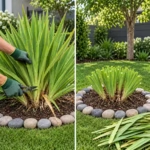
Once an individual flower stem has completely finished producing all of its available buds, do not leave the bare, woody stalk standing. Use clean hand pruners to cut the entire spent scape back to the very crown of the plant, right down at the soil line. This opens up the center of the foliage clump to let sunlight reach emerging new flower shoots.
3.Soak Deeply, Don’t Sprinkle :1 inch weekly.
Daylilies are highly drought-tolerant once established, but letting the soil completely dry out will immediately halt the repeat-bloom cycle. Provide 1 inch of water weekly, soaking the top 6 inches of soil deeply rather than applying light daily surface sprinkles. Avoid overhead watering while flowers are open to prevent petal spotting.
4.Divide Overcrowded Clumps :Every 3–5 years.
If an established patch of daylilies stops blooming despite proper deadheading, the root system is likely overcrowded and competing fiercely for nutrients. Dig up the entire root mass in late summer after the main flowering cycle ends, gently pry the dense fans apart into smaller sections containing 2 to 3 leaf fans each, and replant them in fresh, organic matter.
Three Mistakes That Stop the Show
- Over-fertilizing with Nitrogen: Applying high-nitrogen fertilizers forces the daylily to channel its energy into producing a massive, dense mound of lush green leaves, leaving the plant with very little fuel to push out new flower buds. Stick to a balanced, low-nitrogen, slow-release fertilizer ($10\text{-}10\text{-}10$) applied strictly in early spring.
- Planting Too Deeply: The crown of the daylily—where the green leaf fans emerge from the fleshy root system—should never sit deeper than 1 inch below the soil surface. Planting them too deeply causes the plant to struggle, often resulting in great foliage but zero summer flowers.
- Growing the Wrong Variety: It is important to note that regular daylilies will only flower once per season regardless of how much you deadhead them. To get continuous flowers, ensure you are planting documented reblooming varieties (such as Stella de Oro, Purple de Oro, or Happy Returns), which possess the unique genetic ability to cycle through multiple successive bloom periods.
How To Keep Daylilies Blooming All Summer
This video demonstrates the physical technique of cutting back spent daylily scapes down to the ground to redirect the plant’s energy store into producing a fresh round of summer buds.