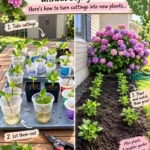
If you’re seeking a fast, reliable, and cost-free way to expand your garden, propagation through cuttings is the ultimate hack. Forget the lengthy, uncertain process of starting seeds; using cuttings allows you to clone the best characteristics of a healthy parent plant and significantly cut down the time to maturity.
This guide explores the essential techniques for rooting and details 20 specific plants and herbs that thrive when propagated this way, transforming you into a true propagation expert.
Why Choose Cuttings Over Seeds?
Cuttings involve taking a segment of a stem, root, or leaf and inducing it to grow into an entirely new, independent plant. This method is preferred because it:
Ensures Consistency: The new plant is a genetic clone of the original, guaranteeing the exact same flower color, growth habit, and flavor profile.
Speeds Up Growth: Since the cutting is taken from mature tissue, it is biologically ahead of a seedling and establishes itself far more quickly.
Saves Money: You can continuously multiply your favourite plants, shrubs, and herbs without ever needing to buy more seeds or nursery stock.
The Types of Cuttings You Need to Know
Successful rooting starts with selecting the right type of tissue at the right time of year.
Softwood: Taken in spring from new, flexible growth (e.g., Basil, Fuchsia). This tissue roots quickly but needs high humidity.
Semi-Ripe: Taken in mid-to-late summer from partially matured stems (e.g., Lavender, Sage, Hydrangea). This is best for shrubs and perennial herbs.
Hardwood: Taken in fall or winter from mature, woody stems (e.g., Roses, Holly). This is the slowest to root and is often planted for overwintering.
Heel or Basal: Includes a small piece of older, woody tissue (the heel) for enhanced rooting, often used for plants like Rosemary.
Leaf/Root: The entire new plant grows from specialized tissue in the leaf (e.g., Succulents) or root (e.g., Comfrey, Horseradish).
Essential Rooting Techniques
A successful rooting environment is moist, warm, and highly humid.
Prepare the Medium: Use a sterile, light, and well-draining mixture, such as a blend of peat moss, perlite, and sand. Avoid regular garden soil, which can compact and cause rot.
Take the Cut: Always make a clean cut below a node (where a leaf meets the stem), as this area contains the highest concentration of hormones necessary for root initiation. Remove the leaves from the bottom half of the stem.
The Callus Rule: For fleshy plants like succulents or Dumb Cane, allow the cut end to dry out for 1-2 days to form a protective callus. Planting before callusing will often lead to rot.
Humidity is Key: Place a plastic bag or dome over the planted cuttings to create a greenhouse effect. This high humidity prevents the cutting from drying out before roots can develop.
Water Sparingly: Keep the medium moist but avoid sogginess at all costs. Overwatering is the biggest reason cuttings fail.
Rooting Hormone: For woody or semi-ripe cuttings, dipping the base in a rooting hormone powder significantly increases rooting speed and success.
The List: 20 Plants Ready for Cloning
Here are 20 garden favourites—from herbs to houseplants—that are simple to multiply using cuttings:
Aromatic & Culinary Herbs
Basil: Take Tip Cuttings anytime during the growing season. They root quickly in a jar of water (change the water every few days) or moist soil.
Rosemary: Use Heel Cuttings in spring or fall. Plant in sandy compost mix and maintain high humidity, avoiding direct sun until roots appear.
Lavender: Take Tip Cuttings in late spring from softwood tips. Plant in a sand/peat mix, removing lower leaves first.
Thyme: Use Tip Cuttings in mid-summer. Dip in rooting hormone and place in a moist potting mix; roots reliably in 2–3 weeks.
Sage: Propagate using Semi-Ripe Basal Cuttings in late summer. This requires a sandy, well-drained medium for rooting.
Ornamentals & Flowers
Geranium (Pelargonium): Use Stem Cuttings in late summer or early spring. Allow the cut end to dry (callus) for a few hours before planting in a peat-free mix, and water sparingly.
Rose: Take Hardwood Cuttings in fall or winter. Plant 6–8 inch segments deep in the ground or a pot to overwinter.
Hydrangea: Use Tip Cuttings in summer from semi-ripe stems. High humidity and rooting hormone are recommended.
Fuchsia: Propagate using Softwood Cuttings in early spring. Use non-flowering tips and keep covered and warm for fast rooting.
Weigela: Can be grown from Softwood or Hardwood Cuttings depending on the season. Dip in hormone and keep moist and warm.
Houseplants & Succulents
Snake Plant (Sansevieria): Use Leaf Cuttings cut into 2–3 inch segments. Allow the cut ends to callus for 1–2 days, then plant upright in cactus mix.
Philodendron: Take Tip Cuttings with 2–3 nodes. These can be rooted in water or moist soil, ensuring the nodes are covered.
African Violet: Use Leaf Cuttings with Stalk. Insert the stalk at an angle into a peat-perlite mix and place in indirect light; baby plants will appear at the base.
Aluminum Plant (Pilea cadierei): Use Tip Cuttings (4–6 inches) in spring or summer. Pinch the tips after rooting to encourage a bushy shape.
Dumb Cane (Dieffenbachia): Propagate using Tip Cuttings or Stem Sections in spring. Allow tips to callus; stem sections can be laid horizontally in the rooting medium.
Chinese Evergreen (Aglaonema): Use Tip or Stem Cuttings. Lay 3-inch stem sections horizontally in moist sand and peat, covered with plastic.
Root & Other Plants
Comfrey: Use Root Cuttings (2–3 inch sections) in spring or fall. Plant horizontally 2 inches deep.
Horseradish: Take Root Cuttings (4–6 inches) in spring. Plant sections vertically, root end down.
California Tree Poppy (Romneya): Use Root Cuttings (3-inch pieces) typically in December, placed horizontally in trays of compost and sand.
Mastering these techniques means you never have to pay for a new plant again, ensuring your garden is filled with flourishing, healthy clones of your most beloved varieties. Happy propagating!