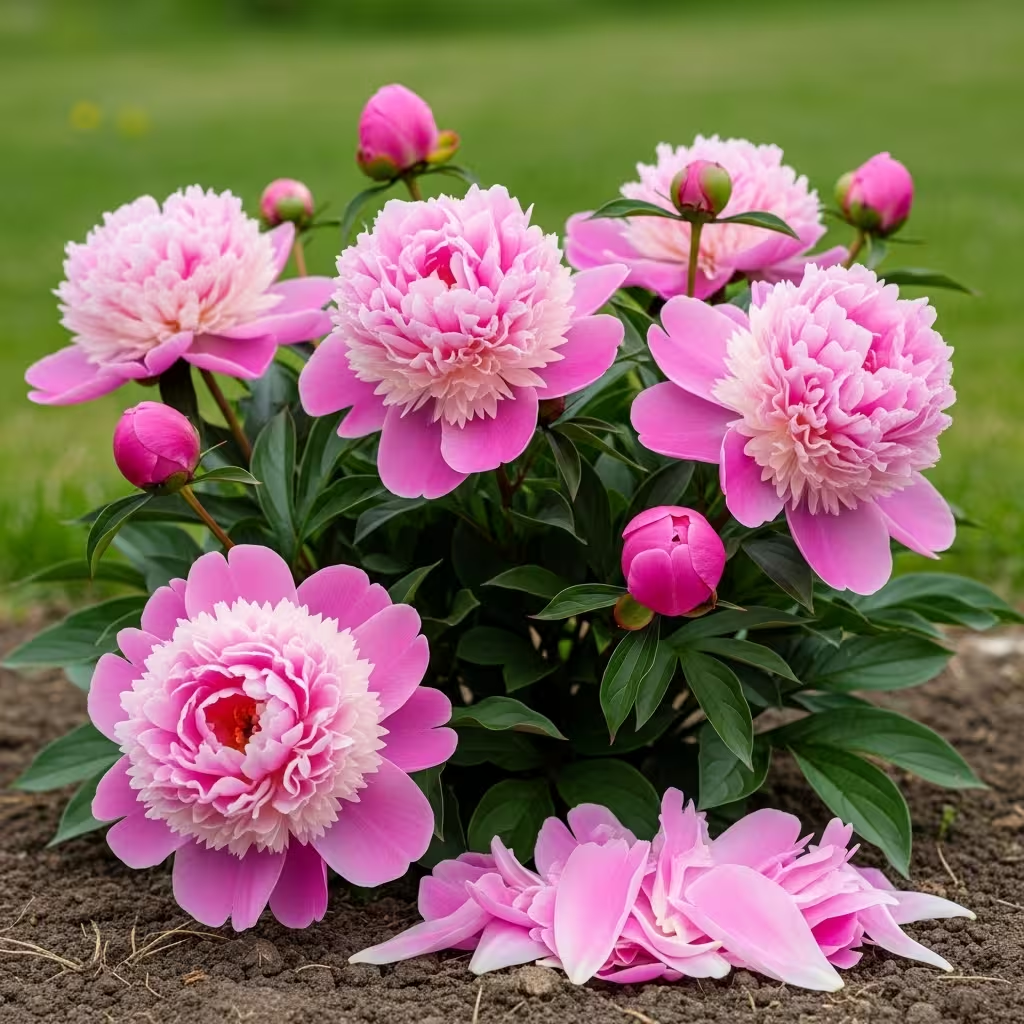
Most gardeners view January as a month for catalogs and tea, but for the peony enthusiast, it is a critical window of opportunity. While your peonies appear to be doing absolutely nothing above the frozen soil, the “eyes” (buds) for next year’s flowers are already formed and waiting.
How you treat your garden in the dead of winter determines whether you’ll have a lush explosion of blooms in May or a disappointing patch of blighted leaves. Here is your unique checklist for essential peony care during the year’s coldest month.
Step 1: The Sanitation Sweep (Banish the Blight)
Botrytis, or peony blight, is a fungal nightmare that can turn healthy buds into black mush. This fungus survives the winter by “camping out” on old peony stems and leaf litter.
- The Action: Clear away any remaining brown stalks or crunchy debris from the surface.
- The Rule: Do not put these scraps in your compost pile! Trash them or burn them. Keeping the soil surface sterile is the single best way to ensure your spring growth is clean and disease-free.
Step 2: The “Eye” Exam
If you look closely at the soil surface, you might see tiny, pink, pearl-like nubs. These are the “eyes.” To bloom successfully, they need the winter chill (vernalization), but they shouldn’t be left completely exposed to the elements.
- The Action: If the wind or rain has washed soil away, gently cover the pink tips with about an inch of soil.
- The Warning: Don’t bury them too deep! If the eyes are more than two inches below the surface, the plant will grow leaves but will refuse to produce flowers.
Step 3: Correct for Frost Heave
The cycle of freezing and thawing is like a slow-motion earthquake for your garden. It can literally “heave” a peony crown out of the ground, exposing sensitive roots to the biting air.
- The Action: Take a walk through your garden after a hard frost. If you see roots or crowns rising above the soil line, gently press them back down with your hands. Avoid using heavy boots, which can snap the brittle, frozen roots.
Step 4: Applied Thermal Sanity (Mulching)
Fluctuating temperatures are the enemy of a dormant peony. If the sun warms the ground too much in January, the plant might “wake up” early, only to have its tender new growth killed by the next freeze.
- The Action: Apply a 2-inch layer of breathable mulch, such as straw or shredded leaves.
- Pro Tip: Avoid heavy bark or wood chips. These can trap too much moisture against the crown, leading to winter rot.
Step 5: Master the Drainage
Peonies are incredibly hardy, but they have one fatal weakness: “wet feet.” Standing water around a dormant crown will turn it into a black, soggy mess by spring.
- The Action: Check your garden after a heavy rain or snowmelt. If you see puddles forming over your peony beds, clear small “escape channels” with a trowel to guide the water away. A dry crown is a healthy crown.
Step 6: Pruning by Personality
Not all peonies are created equal, and pruning the wrong one in January can cost you years of growth.
- Herbaceous & Itoh Peonies: These can be cut right to the ground if any stalks remain.
- Tree Peonies: Stop! These have woody stems that do not die back. If you cut these to the ground, you are cutting off next year’s flowers. Only remove wood that is obviously hollow, brittle, or dead.
The “Ant Myth” Debunked
As you prepare your peonies, you might remember the old legend that ants are required to “chew open” the sticky buds to help them bloom. The Truth: Peonies don’t need ants. The ants are simply there for the free nectar. While the ants don’t hurt anything, your January maintenance—not the ants—is what actually guarantees those massive, pillowy blooms.