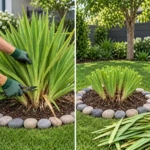
November gardening advice typically falls into two camps: cut everything back for neatness, or leave everything standing for wildlife. Both positions miss the actual complexity. The real skill lies in distinguishing between plants that need intervention and those that benefit from strategic neglect.
This isn’t about aesthetics or following rules. It’s about understanding what each plant is doing during dormancy and what threats it faces. The difference between cutting and leaving can determine whether your garden emerges vibrant or diseased come spring.
The Case Against Universal Cleanup
The impulse to tidy up before winter runs deep. A bare, orderly garden feels responsible—like you’ve done your job. But that bare soil is often exposed crown tissue vulnerable to temperature fluctuations. Those “messy” dead stems are insulation. What looks like neglect is frequently superior plant care.
Dead foliage protects crowns from freeze-thaw cycles—the repeated freezing and thawing that heaves plants out of the ground and damages root systems. Standing stems trap snow, creating an insulating blanket. The dried material moderates soil temperature, preventing the wild swings that stress dormant plants.
Remove all that protection for visual order, and you’re trading next spring’s vigor for this November’s tidiness.
What Actually Belongs Standing
Coneflowers and black-eyed Susans are the poster plants for leaving alone. Their sturdy seed heads feed goldfinches and other seed-eating birds through winter. Those dark central cones you’re tempted to deadhead? They’re winter bird feeders that happen to also protect the crown below. Cut them now, and you’ve eliminated both the food source and the insulation in one misguided snip.
Sedum transforms in winter. Those flat-topped flower heads that look spent in October become architectural sculptures under frost and snow. They catch light differently, create visual interest in a dormant landscape, and protect the crown. There’s no plant health reason to remove them—only aesthetic preference, and that preference often reflects a misunderstanding of what winter gardens can offer.
Ornamental grasses are non-negotiable leave-alones. Their standing blades and plumes provide crucial overwintering habitat for beneficial insects—the ones that will eat your pests next summer. The foliage also protects the crown and offers unmatched winter texture. Cutting grasses in fall is purely detrimental; wait until late winter or early spring when new growth begins.
Evergreen and semi-evergreen perennials—hellebores, heuchera, hardy geraniums, certain penstemons—actively use their existing foliage through winter. Those leaves are working, photosynthesizing on warmer days, insulating the crown. Removing them weakens the plant. Any cleanup should wait until spring when you can distinguish dead material from living tissue.
What Demands Cutting
The counterpoint exists for specific, defensible reasons: disease pressure, pest lifecycle interruption, and preventing genuine rot problems.
Peonies are the clearest case. They’re susceptible to botrytis blight, a fungal disease that overwinters in dead foliage and stem tissue. Leave peony foliage standing, and you’re essentially culturing disease for next year’s plants. This isn’t theoretical—it’s predictable. Cut peonies to ground level after frost, remove all debris, and dispose of it away from the garden. This single action prevents more problems than almost any other fall task.
Phlox and bee balm suffer from powdery mildew so reliably that it’s practically part of their identity. By November, their stems and leaves are coated in fungal spores waiting to reinfect next spring’s growth. Cutting them back removes the disease reservoir. Leave them standing, and you guarantee the same mildew problem next summer.
Bearded iris foliage harbors iris borers—a devastating pest whose eggs overwinter in dead leaf tissue. The adult moths lay eggs in fall; those eggs hatch in spring and bore into new growth, eventually destroying the rhizome. Cutting back iris fans in fall breaks that lifecycle. It’s preventive pest management that actually works.
Hostas turn to slime after hard frost. That soggy foliage isn’t just unattractive—it’s prime slug and snail habitat. These pests lay eggs in protected, moist areas. Decomposing hosta leaves are perfect for them. Remove the foliage, and you’re eliminating their preferred overwintering site.
Daylilies similarly collapse into wet, matted clumps that become increasingly difficult to manage. Unlike hostas, it’s more about practicality than pest pressure—that slimy mass in November becomes a tangled mess around emerging growth in April. Better to cut it back cleanly now than try to extract it carefully later without damaging new shoots.
The Three Criteria
Every November pruning decision should answer three questions:
- Does this plant have a documented disease problem that overwinters in foliage? If yes, cut it back.
- Does leaving it standing provide meaningful wildlife benefit or crown protection? If yes, leave it.
- Will the foliage turn into a rotting mess that creates problems rather than insulation? If yes, cut it back.
Most plants fall clearly into one category or another. The confusion comes from applying general rules (“always clean up in fall” or “never cut anything back”) instead of evaluating individual species.
The Timing Variable
Even when cutting is appropriate, timing matters. Wait until several hard frosts have occurred and the plant is genuinely dormant. Foliage should be completely yellowed or browned. Cutting too early—while plants are still photosynthesizing and moving nutrients to roots—weakens them unnecessarily.
This is why calendar dates are useless. “November pruning” means something different in Georgia than Minnesota. The trigger is dormancy, not date. Let the plants tell you when they’re ready.
Tool Hygiene Matters More Than You Think
This is where casual gardeners become disease vectors. Using the same pruners on mildewed phlox and then healthy plants spreads pathogens efficiently. Disinfecting blades between plants—especially after cutting anything with visible disease—is non-negotiable if you’re serious about plant health.
A quick wipe with rubbing alcohol or diluted bleach takes seconds and prevents problems that take years to resolve. The tool hygiene step is where good intentions about disease prevention often fail in practice.
The Bigger Picture
Selective November pruning reflects a more sophisticated understanding of gardening. It acknowledges that plants have different needs, that wildlife integration matters, that disease prevention is more effective than disease treatment, and that sometimes the best action is inaction.
The gardeners with the healthiest spring gardens aren’t necessarily the ones with the tidiest fall plots. They’re the ones who cut strategically—removing genuine threats while leaving beneficial structure in place.
Your November garden should look intentional but not sterile. Some plants cut back cleanly, others standing with purpose. That combination of intervention and restraint is what actually supports plant health, not the uniform application of “cleanup” or “leave it wild.”
The real skill is knowing which approach each plant needs and having the discipline to act accordingly—even when it contradicts general advice or aesthetic preference. That’s the difference between gardening as yard maintenance and gardening as ecological management.