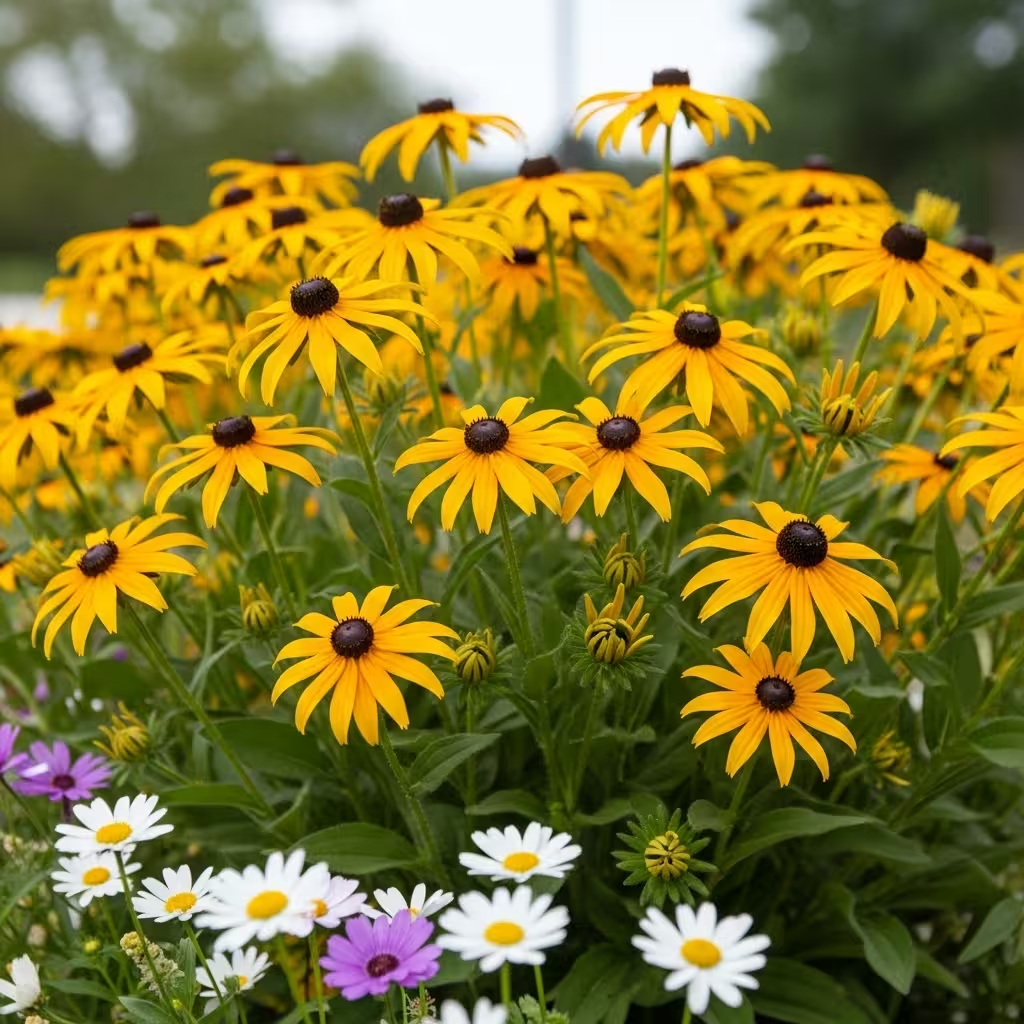
If you want a garden that looks like a professional landscape but requires half the work, you need to invite “volunteer” plants into your beds. Self-seeding flowers are annuals or biennials that drop their own seeds at the end of the season, essentially planting next year’s garden for you while you’re inside staying warm.
By choosing the right varieties, you create a “living cycle” where the garden evolves and fills in its own gaps, suppressing weeds and providing a continuous explosion of color from spring through the first frost.
1. California Poppies These are the ultimate “set it and forget it” flowers. They thrive in poor soil and sunlight. Once the petals fall, they leave behind long, pointed seed pods that eventually “snap” open, launching seeds across your garden. They will return every spring in a vibrant wash of orange and yellow.
2. Nigella (Love-in-a-Mist) Nigella is famous for its delicate, fern-like foliage and jewel-toned blue flowers. The real magic happens after the bloom; it produces large, striped seed pods that look like Victorian ornaments. If you leave these pods on the plant, Nigella will reliably carpet your garden year after year.
3. Cosmos Cosmos are the workhorses of the summer garden. They provide height and airy texture. While they are annuals, they are prolific seed-producers. If you stop “deadheading” (cutting off spent blooms) in late September, they will drop enough seeds to ensure a mini-forest of Cosmos the following summer.
4. Calendula (Pot Marigold) Calendula is as tough as it is beautiful. Not only are the petals edible and medicinal, but the plant is a vigorous self-seeder. Its “C-shaped” seeds are large and easy to spot, often sprouting in late autumn to overwinter as small green rosettes ready for an early spring start.
5. Verbena Bonariensis This plant is a designer favorite because of its “see-through” quality—tall, wiry stems topped with purple clusters. It is a master at weaving itself through other plants. It seeds itself into the smallest cracks between pavers and garden edges, providing a purple haze that lasts until November.
6. Forget-Me-Nots For a sea of blue in early spring, Forget-Me-Nots are essential. They bloom alongside tulips and daffodils, then quickly go to seed. While the plant itself dies back in the heat of summer, its seeds remain dormant in the soil, waiting for the first cool rains of spring to wake up.
7. Foxgloves (Digitalis) As biennials, Foxgloves spend their first year growing leaves and their second year producing tall, dramatic flower spikes. Once those spikes finish blooming, they release thousands of tiny seeds. If you have a shady corner, Foxgloves will happily colonize it forever.
8. Borage Borage is a pollinator magnet with stunning star-shaped blue flowers. It grows incredibly fast and drops seeds just as quickly. It’s a “pioneer plant,” meaning it’s often the first thing to pop up in bare soil, protecting the earth and feeding the bees.
9. Larkspur Larkspur offers the elegance of Delphiniums but with much less fuss. These tall, stately spires in shades of blue, pink, and white will drop their seeds in late summer. The seeds actually prefer a bit of winter “chill” to germinate, making them perfect for cold-weather climates.
10. Nasturtiums Known for their peppery edible leaves and bright blooms, Nasturtiums produce large, pea-sized seeds. Because the seeds are so big, they are easy for children to handle, but if left on the ground, they will tuck themselves into the soil and return faithfully every season.
How to Manage a Self-Seeding Garden
The Golden Rule: You must stop deadheading at the end of the season. If you remove every spent flower, you are removing the seeds. Leave the “ugly” dried seed heads on the stalks until they are fully brown and brittle.
Identify Your Seedlings: The biggest challenge is not accidentally pulling your “volunteers” as weeds. Learn what the tiny sprouts of your favorite flowers look like so you can leave them alone during your spring cleanup.
Edit, Don’t Weed: If your poppies start growing in the middle of your walking path, you don’t have to kill them. Most self-seeders can be gently dug up and moved to a better spot when they are only an inch or two tall.