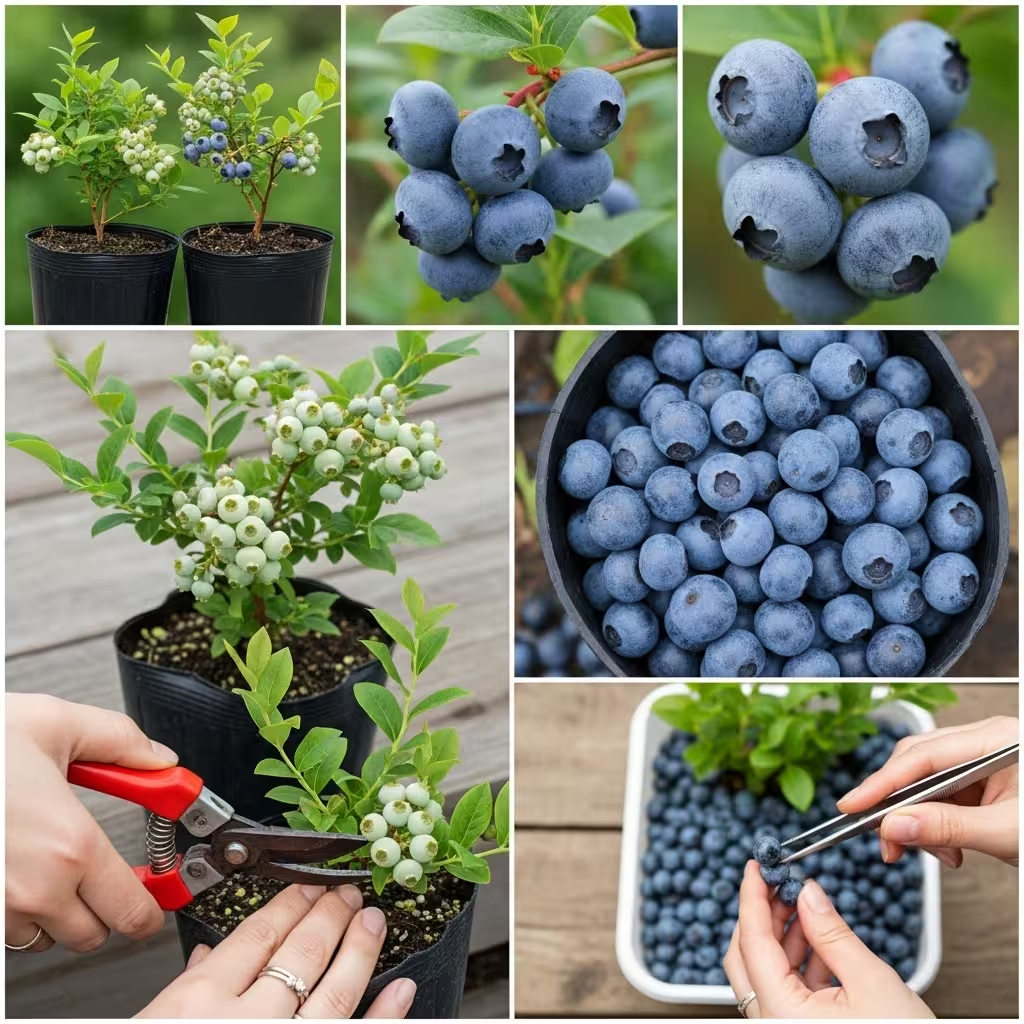
Picture this: it’s a warm summer morning, and you’re walking through your garden with your coffee in hand. You pause at your blueberry bushes, heavy with clusters of plump, deep-blue gems that practically glow in the morning sun. You pluck a handful of berries, still warm from yesterday’s sunshine, and pop them in your mouth. That burst of sweet-tart flavor? That’s the taste of gardening success, my friend.
I’ll never forget the first time I successfully grew blueberries. After years of struggling with finicky plants that seemed determined to disappoint me, I finally cracked the code. And let me tell you – once you understand what these beautiful bushes really want, they’ll reward you with years of abundant harvests that’ll make your neighbors green with envy (and maybe a little purple around the mouth from sampling your berries!).
The secret isn’t magic, though it might feel like it when you’re harvesting bowls full of berries. It’s all about understanding that blueberries are a bit like that friend who has very specific preferences – once you know what makes them happy, they’re absolutely delightful to have around.
Creating Blueberry Paradise: Understanding What Your Bushes Crave
Here’s something I learned the hard way: blueberries are not your average fruit bush. They’re like the sophisticated cousins of the berry family, with particular tastes that you simply can’t ignore if you want them to thrive.
The Sunshine and Soil Story
Blueberries are sun worshippers – they want at least six to eight hours of direct sunlight daily. But here’s where it gets interesting: while they love basking in the sun, their feet (or should I say roots?) prefer to stay cool and consistently moist. It’s like they want to sunbathe while keeping their toes in a cool stream!
The soil situation is where many gardeners stumble, and honestly, where I made my biggest mistakes early on. Blueberries are acid-loving plants that thrive in soil with a pH between 4.5 and 5.5. Most garden soils hover around neutral (pH 7), which means your blueberries are basically living in an environment that’s completely wrong for them. No wonder they struggle!
The Climate Connection
There’s something beautifully poetic about how blueberries need both winter’s chill and summer’s warmth to produce their best fruit. They require what we call “chill hours” – those cold winter hours below 45°F that signal to the plant that it’s time to rest and prepare for next year’s spectacular show.
I think of it as nature’s way of teaching us patience. Your blueberry bushes are essentially taking a winter vacation, gathering strength for the incredible performance they’ll put on come spring and summer.
Your Blueberry Variety Adventure: Choosing the Perfect Bush
Walking into a nursery and facing rows of different blueberry varieties can feel overwhelming – trust me, I’ve been there! But choosing the right variety for your garden is like matchmaking, and once you know what to look for, it becomes an exciting treasure hunt.
Highbush Beauties: The Garden Favorites
Highbush blueberries are like the golden retrievers of the berry world – adaptable, reliable, and beloved by gardeners everywhere. These are your classic blueberry bushes, growing 4-6 feet tall and producing those plump berries we all dream about.
What I love about highbush varieties is their versatility. Whether you’re in Zone 4 or Zone 7, there’s likely a highbush variety that’ll thrive in your garden. Popular varieties like ‘Bluecrop’ and ‘Jersey’ have been garden staples for decades, and for good reason – they’re practically foolproof once you get their growing conditions right.
Lowbush Charmers: Perfect for Cooler Climates
If you’re gardening in a colder climate, lowbush blueberries might be your new best friends. These compact beauties rarely grow taller than 2 feet, making them perfect for smaller spaces or as groundcover in naturalized settings.
I have a friend in Maine who grows lowbush blueberries, and every fall, her entire yard turns into this incredible tapestry of red and orange as the leaves change. It’s like having a living painting in your landscape!
Rabbiteye Rebels: Heat-Loving Southerners
For my gardening friends in the South, rabbiteye blueberries are absolute champions. These heat-tolerant varieties laugh in the face of sweltering summers that would stress other blueberry types.
The name “rabbiteye” comes from the pink color of the berries before they fully ripen – they look like little pink rabbit eyes peeking through the foliage. How adorable is that?
The Foundation of Success: Preparing Your Blueberry Haven
This is where the real magic happens, fellow gardeners. Proper soil preparation is like laying the foundation for a house – get it right, and everything else falls into place beautifully.
The pH Detective Work
Before you plant a single bush, you need to play soil detective. Grab a soil pH test kit (they’re inexpensive and available at any garden center) and test your soil. This simple step will save you years of frustration and disappointment.
When I tested my soil for the first time, I discovered it had a pH of 7.2 – perfectly neutral and completely wrong for blueberries. That explained why my first attempts at growing these beauties had been such spectacular failures!
The Acidification Game-Changer
Here’s where we get to play garden chemist, and honestly, it’s kind of fun once you get the hang of it. Lowering your soil pH isn’t just about adding acidic materials – it’s about creating a long-term environment where your blueberries can truly flourish.
Elemental sulfur is your heavy-duty tool for serious pH adjustment. It’s like the power drill of soil acidification – effective but requiring patience. Apply it several months before planting, and let soil bacteria work their magic to convert it into the sulfuric acid that actually lowers the pH.
But here’s where it gets exciting – there are some fantastic natural methods that work beautifully too!
The Sweet Hacks: Natural Ways to Keep Your Soil Perfectly Acidic
Over the years, I’ve discovered some absolutely brilliant natural methods for maintaining that perfect acidic environment your blueberries crave. These aren’t just effective – they’re sustainable and often use materials you might otherwise throw away!
The Coffee Ground Gold Mine
Every morning, as I sip my coffee and plan my garden day, I’m also creating one of the best natural soil acidifiers available. Used coffee grounds are like garden gold for blueberry lovers!
I started asking my local coffee shop to save their grounds for me, and now I have a steady supply of this fantastic soil amendment. As the grounds decompose, they gradually lower soil pH while adding valuable organic matter. It’s like giving your blueberries a slow-release vitamin supplement that they absolutely love.
Just scatter the grounds around your bushes as mulch, or work them gently into the top few inches of soil. Your blueberries will thank you with increased vigor and better fruit production.
The Pine Needle Treasure
Here’s a gardening hack that makes me feel like I’m getting away with something: pine needles are absolutely fantastic for blueberry care! If you have pine trees on your property (or know someone who does), you’re sitting on a goldmine of natural soil acidifier.
I collect pine needles in the fall and use them as mulch around my blueberry bushes. As they slowly decompose, they release natural acids that keep the soil pH exactly where blueberries want it. Plus, they create this beautiful, natural-looking mulch that suppresses weeds and retains moisture.
The Organic Matter Magic
Incorporating organic matter like well-composted pine bark or peat moss isn’t just about pH – it’s about creating the kind of rich, well-draining soil structure that makes blueberry roots absolutely sing with joy.
I like to think of organic matter as creating a luxury hotel for blueberry roots – comfortable, well-ventilated, with room service (nutrients) delivered right to their door!
Planting Day: Setting Your Blueberries Up for Lifelong Success
There’s something deeply satisfying about planting day – it’s when all your preparation pays off and you finally get to welcome new plants into your garden family.
The Perfect Planting Hole
When I dig planting holes for blueberries, I always remind myself that I’m creating their new home for the next 20-30 years (yes, blueberry bushes can live and produce that long!). Make the hole twice as wide as the root ball but only as deep – you want those roots to spread out, not sink down.
Here’s a technique I learned from an old-timer at my local nursery: rough up the sides of the planting hole with your shovel. Smooth-sided holes can actually prevent roots from spreading properly – it’s like they hit an invisible wall and just circle around instead of exploring their new neighborhood.
The Gentle Introduction
When you remove your blueberry bush from its container, take a moment to examine the roots. If they’re circling around the root ball (which often happens with container plants), gently tease them apart with your fingers. It might seem harsh, but you’re actually encouraging them to spread out and establish properly in their new home.
Position the plant so the top of the root ball is level with the surrounding soil surface – not buried deeper, not sitting higher. This is crucial for proper root development and plant health.
The Art of Ongoing Blueberry Care
Growing blueberries successfully is like tending a friendship – it requires consistent attention, understanding, and the occasional thoughtful gesture to keep things thriving.
The Watering Wisdom
Blueberries have a bit of a Goldilocks complex when it comes to water – they don’t want too much, they don’t want too little, they want it just right! Aim for about 1-2 inches of water per week, including rainfall.
I’ve found that deep, infrequent watering works much better than frequent shallow watering. Think of it as encouraging your blueberry roots to grow deep and strong, rather than staying shallow and dependent on daily drinks.
A drip irrigation system or soaker hose is absolutely worth the investment. It delivers water right to the root zone without wetting the foliage, which helps prevent fungal diseases that love damp leaves.
The Fertilizer Philosophy
Here’s something that might surprise you: blueberries are actually quite modest when it comes to fertilizer needs. Over-fertilizing can actually hurt more than help, leading to lots of leafy growth but disappointing fruit production.
I feed my blueberry bushes once in early spring with a fertilizer specifically formulated for acid-loving plants. Think of it as their annual health checkup and vitamin boost – just enough to keep them strong and productive without overwhelming them.
The Mulching Marvel
Mulching around blueberry bushes is one of those simple practices that pays huge dividends. A 2-3 inch layer of organic mulch keeps soil moisture consistent, suppresses weeds, and gradually breaks down to improve soil structure.
I use a combination of pine needles, shredded bark, and occasional coffee grounds for my mulch. It looks beautiful, smells wonderful (especially when it includes coffee grounds!), and creates the perfect environment for happy blueberry roots.
Pruning: The Art of Blueberry Sculpture
Pruning blueberry bushes is like giving them a spa treatment – it might seem a bit drastic at the time, but they always emerge looking and feeling so much better!
The Winter Pruning Ritual
Late winter, when the bushes are dormant but you can clearly see their structure, is the perfect time for annual pruning. I approach each bush like an artist approaching a sculpture, looking for the natural beauty hidden within the tangle of branches.
Start by removing anything that’s obviously dead, damaged, or diseased – these are no-brainers that have to go. Then step back and look at the overall shape. Your goal is to create an open center that allows air circulation and sunlight to reach all parts of the bush.
The Renewal Process
For mature bushes (over 6 years old), part of your annual pruning should include removing some of the oldest canes entirely. This might feel harsh, but you’re actually stimulating new growth that will be more productive than those tired old branches.
I like to think of this as giving my blueberry bushes a chance to reinvent themselves each year – out with the old, in with the vigorous new growth that will produce the best fruit.
Protecting Your Berry Treasure
Growing beautiful blueberries inevitably means sharing your garden with some uninvited guests who also appreciate good fruit. But don’t worry – there are plenty of ways to outsmart both pests and diseases while keeping your garden practices organic and sustainable.
The Bird Situation
Let’s be honest – birds have excellent taste in fruit, and they’ll spot your ripening blueberries long before you think they’re ready to harvest. I’ve learned to take this as a compliment to my growing skills!
Netting is the most effective solution, though it requires a bit of planning and patience to install properly. I drape bird netting over a simple PVC frame that keeps the netting off the bushes while still protecting the fruit. It looks a bit like I’m growing blueberries in a giant mosquito tent, but it absolutely works.
The Pest Detective Work
Regular inspection is key to staying ahead of pest problems. I make it a habit to really look at my blueberry bushes during my morning garden walks, checking for any signs of trouble.
Aphids occasionally show up, but they’re usually easy to control with a strong spray from the hose or by encouraging beneficial insects like ladybugs and lacewings. I plant flowers like alyssum and yarrow nearby to attract these helpful garden allies.
Disease Prevention Strategy
Most blueberry diseases are fungal, and they absolutely love damp, humid conditions with poor air circulation. This is why proper spacing, pruning, and watering practices are so important – you’re creating an environment where diseases simply can’t get established.
If I do spot signs of disease, I remove affected plant parts immediately and dispose of them in the trash (never the compost pile). It’s like quarantining a sick family member – act fast to prevent the problem from spreading.
The Sweet Reward: Harvesting Your Blueberry Bounty
There’s truly nothing quite like that first harvest from bushes you’ve nurtured from planting. The anticipation builds as you watch the berries slowly change from green to pink to that deep, dusky blue that signals perfect ripeness.
The Perfect Picking Technique
Ripe blueberries should come off the bush easily with just a gentle twist – if you have to tug, they’re not quite ready yet. This is one of those garden skills that develops with practice, but once you get the hang of it, you’ll know exactly when each berry is at its peak.
I like to harvest every few days during peak season, picking only the fully ripe berries and leaving the others to continue developing. This extends the harvest period and ensures you’re always getting fruit at its absolute best.
Preserving the Harvest
Fresh blueberries will keep in the refrigerator for up to two weeks, but let’s be honest – if you’re growing your own, you’ll probably eat them much faster than that! For longer storage, freezing is absolutely the way to go.
Spread fresh berries in a single layer on a baking sheet and freeze them solid before transferring to freezer bags. This prevents them from clumping together and makes it easy to grab just the amount you need for smoothies, baking, or eating straight from the freezer on hot summer days.
Your Blueberry Growing Journey Starts Now
Growing blueberries successfully is one of those gardening achievements that fills you with genuine pride every single time you walk past your thriving bushes. It’s a perfect combination of understanding plant science, working with natural processes, and having the patience to let things develop at their own pace.
The journey from planting your first bush to harvesting bowls of perfect berries is filled with small discoveries and satisfying moments. You’ll learn to read your plants’ needs, celebrate the first tiny flowers, and experience the pure joy of that first homegrown berry.
But perhaps the best part of growing blueberries is how they connect you to the rhythms of the seasons. Spring brings delicate white flowers that promise future fruit, summer delivers the sweet reward of harvest time, fall paints the bushes in brilliant reds and oranges, and winter provides the essential rest period that makes it all possible again next year.
So grab your soil test kit, start planning your blueberry patch, and prepare for years of delicious harvests. Your future self will thank you every single time you bite into a sun-warmed, perfectly ripe blueberry that you grew with your own two hands. That, my fellow gardener, is what I call the sweet taste of success!