You don’t need a sprawling estate or a brick manor to enjoy the beauty of climbing plants. Whether you have a tiny balcony, a paved patio, or you’re a renter who needs to take your garden with you when you move, containers are your secret weapon.
Climbing plants in pots provide instant privacy, mask unsightly walls, and bring your garden to eye level. The key is choosing varieties that don’t mind their roots being a bit “snug” and providing them with the right support.
Here are 10 gorgeous climbers that are perfectly happy to call a pot their home.
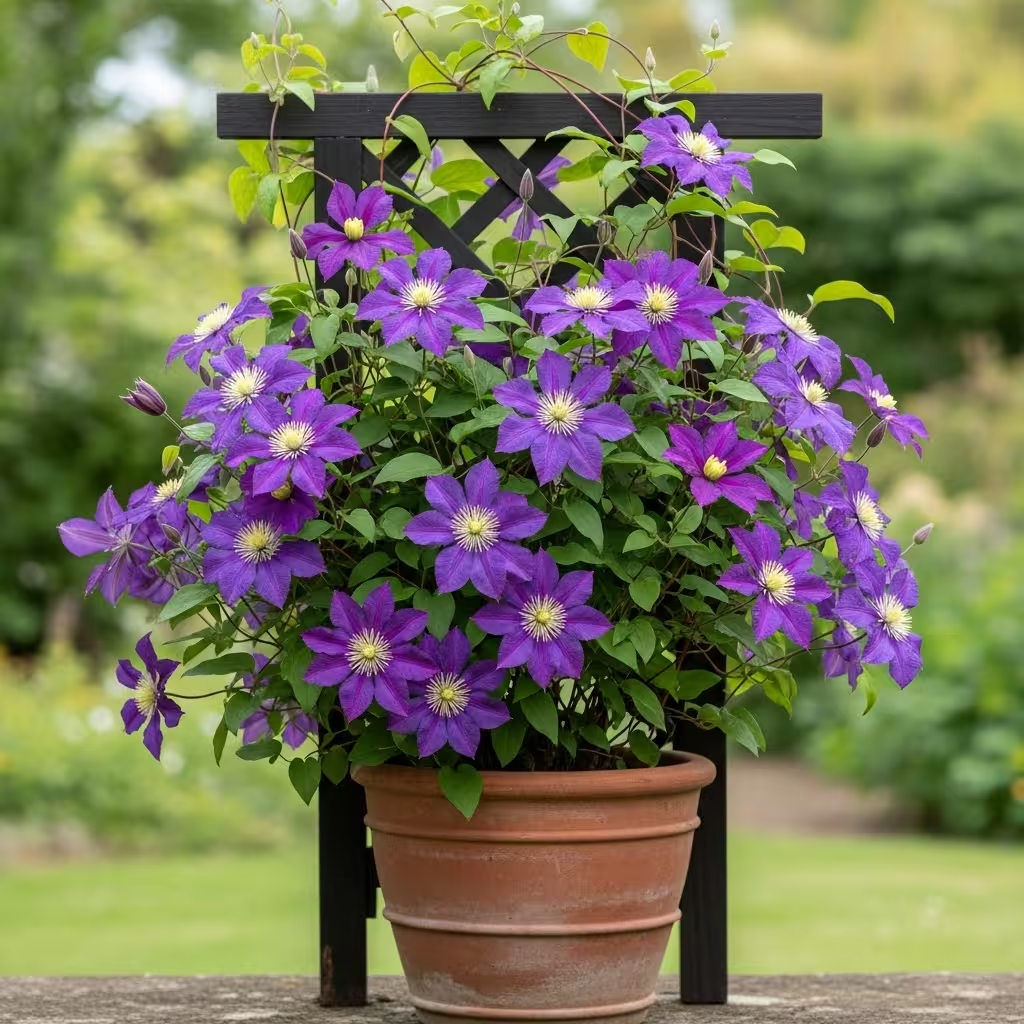
1. Clematis (The Queen of Climbers)
Many Clematis varieties, especially the shorter-growing Group 3 types, thrive in large pots. They offer some of the most stunning, saucer-sized flowers in the botanical world.
- Pro Tip: Remember the old saying: “Feet in the shade, head in the sun.” Keep the pot itself shaded or mulched, while the vine grows up into the sunlight.
2. Mandevilla (The Tropical Star)
With its glossy evergreen leaves and trumpet-shaped blooms in pink, red, or white, Mandevilla is a summer showstopper. It loves the heat and will climb a trellis with minimal guidance.
- Pro Tip: This is a tropical plant. If you live in a colder climate, you can trim it back and bring the pot indoors for the winter.
3. Sweet Peas (The Scent Specialist)
If you want a garden that smells like heaven, Sweet Peas are non-negotiable. They are annuals, meaning they grow fast, bloom hard, and finish in one season—perfect for temporary container displays.
- Pro Tip: The more you pick the flowers, the more the plant produces. Keep a vase ready!
4. Star Jasmine (Trachelospermum jasminoides)
This is one of the most versatile evergreen climbers. It produces tiny, white, star-shaped flowers that release an intoxicating scent, especially in the evening.
- Pro Tip: It’s a slow starter but very drought-tolerant once established in a pot.
5. Black-eyed Susan Vine (Thunbergia alata)
For a “curtain” of color, this vine is unbeatable. It produces cheerful orange, yellow, or white flowers with a distinct dark center. It’s a fast grower that will quickly cover a small obelisk or hoop.
6. Morning Glory (Ipomoea purpurea)
True to its name, these blooms open wide to greet the sun and close by afternoon. Their heart-shaped leaves and vibrant blues and purples offer a classic cottage-garden look.
- Warning: They are enthusiastic self-seeders, so keep them in a pot to prevent them from taking over your yard!
7. English Ivy (Hedera helix)
If you have a shady spot, Ivy is the reliable choice. It provides year-round greenery and has a sophisticated, “English garden” aesthetic.
- Pro Tip: Use it as a “spiller” as well as a “climber” by letting some vines trail over the edge of the pot.
8. Patio Climbing Roses
You don’t need a huge trellis for these. Modern “patio” or “miniature” climbers are bred to stay compact while still producing clusters of fragrant, classic rose blooms.
- Pro Tip: Roses are heavy feeders. Give them a liquid fertilizer every two weeks during the blooming season.
9. Passionflower (Passiflora)
If you want something that looks like it belongs in a sci-fi movie, the Passionflower is for you. The intricate, exotic blooms are unlike anything else in the garden.
- Pro Tip: They have “tendrils” that act like little hands to grab onto wire or mesh.
10. Bougainvillea
Common in Mediterranean and tropical climates, Bougainvillea provides an explosion of neon color (which are actually specialized leaves called bracts).
- Pro Tip: They actually bloom better when their roots are slightly crowded in a pot, making them the ultimate container climber.
3 Golden Rules for Container Climbers
- Size Matters: Use a pot that is at least 15–18 inches deep. Climbing plants need enough soil volume to stay hydrated and to anchor their weight as they grow upward.
- Secure Your Support: Don’t wait for the plant to get big to add a trellis. Insert your support system (obelisk, bamboo stakes, or wire) at the time of planting to avoid damaging the roots later.
- Drainage is Key: Climbing plants generally hate “wet feet.” Ensure your pot has plenty of drainage holes and use a high-quality potting mix rather than heavy garden soil.