The jar of molasses usually waits for gingerbread season. Here’s a reason to bring it out for supper. These slow cooker Amish molasses potatoes have tender centers, skins left on, and a dark, buttery glaze you’ll want to spoon over the wedges before passing the bowl.
The ingredient list is short: potatoes, molasses, butter, and salt. The slow cooker handles the long cooking stretch, with a gentle stir halfway through and a little attention to the lid near the end. Put them beside baked ham or pot roast, and the sweet glaze has something savory to keep it company.
Servings: 6 · Cook on LOW for 5 to 6 hours or HIGH for 2 1/2 to 3 hours.
Choose the Molasses for the Sweetness You Like
Regular unsulphured molasses keeps the flavor on the gentler side. Dark or robust molasses has a stronger taste, so the choice you make at the cupboard matters here. With such a short ingredient list, there’s little else to soften or disguise it.
The potatoes can be russets or Yukon Golds. Scrub them well and keep the skins on, then cut thick wedges. You’re looking for pieces that stay together when you lift them through the glaze.
Ingredients for Slow Cooker Amish Molasses Potatoes
- 3 pounds medium russet or Yukon Gold potatoes, scrubbed and cut into thick wedges
- 1/2 cup unsulphured molasses
- 1/2 cup unsalted butter, melted
- 1 teaspoon kosher salt (or to taste)
How to Make Slow Cooker Amish Molasses Potatoes
- Lightly grease a 4- to 6-quart slow cooker crock with a bit of butter to help keep the potatoes from sticking too much.
- Scrub the potatoes well and pat them dry. Leave the skins on for that old-fashioned farmhouse texture, and cut each potato into thick wedges, about 6–8 wedges per potato.
- In a small bowl or measuring cup, whisk together the molasses, melted butter, and salt until the mixture is smooth and glossy.
- Place the potato wedges into the slow cooker in an even layer, spreading them out as best you can so the glaze can reach all the pieces.
- Pour the molasses-butter mixture evenly over the potatoes, using a spatula to scrape out every bit. Gently toss the potatoes in the crock with a wooden spoon or your hands until they’re all lightly coated.
- Cover the slow cooker with the lid and cook on LOW for 5 to 6 hours, or on HIGH for 2 1/2 to 3 hours, until the potatoes are very tender when pierced with a fork.
- About halfway through cooking, gently stir the potatoes from the bottom up to re-coat them in the molasses-butter mixture. This helps them caramelize more evenly and keeps the edges from drying out.
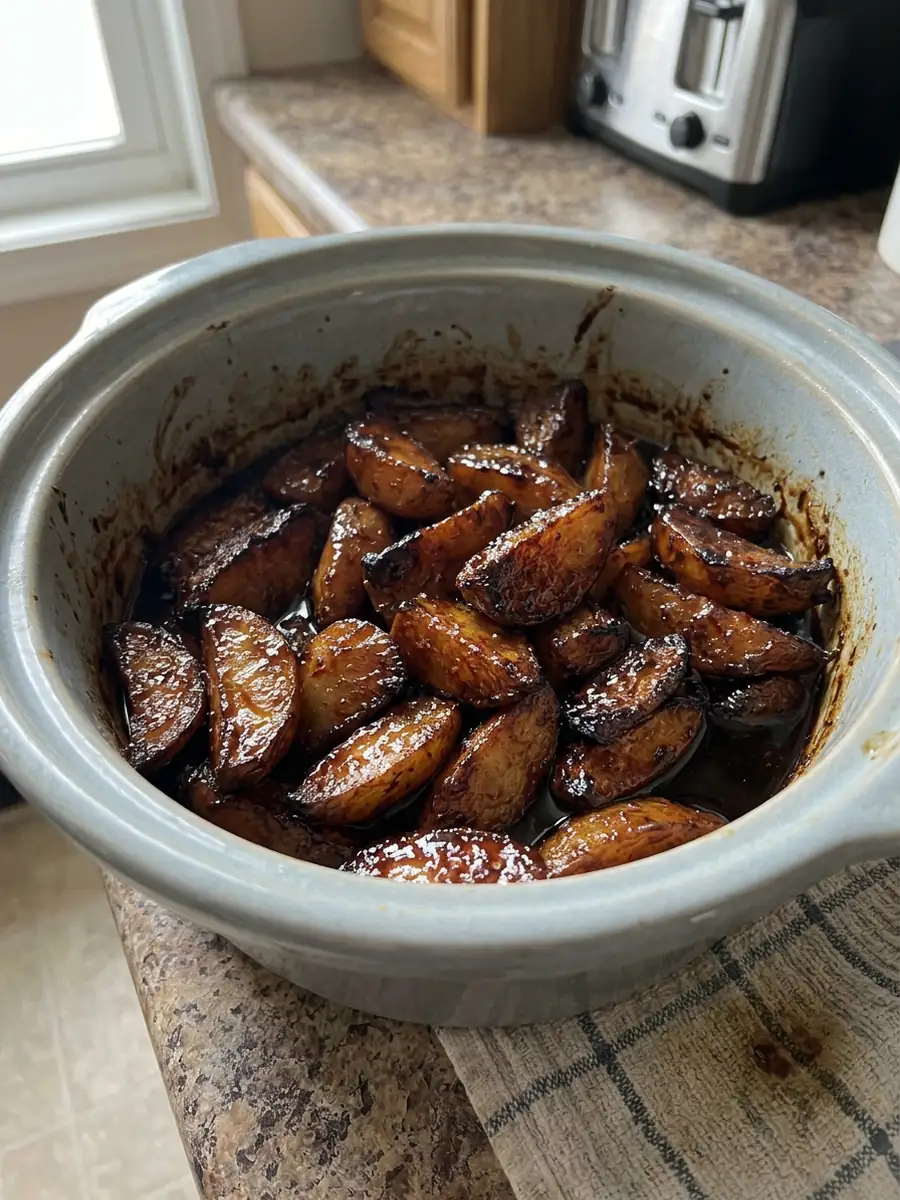
- During the last 30 to 45 minutes of cooking, crack the lid open just a bit with a wooden spoon handle or heat-safe utensil to let some steam escape. This helps the glaze thicken and cling to the potatoes, giving them that deep amber, slightly sticky coating and caramelized edges.
- When the potatoes are tender and coated in a shiny, syrupy glaze, taste and add a pinch more salt if needed. Serve straight from the slow cooker on the warm setting, spooning some of the thickened molasses-butter over the top of each serving.
Give the Glaze Time to Thicken
Keep an eye on the sauce as cooking comes to an end. The slightly open lid lets steam escape, so the glaze can thicken around the wedges. It should coat the potatoes when you spoon it over them.
Check a wedge with a fork, too. The potatoes should be very tender. If your slow cooker runs hot, start checking early; once the pieces soften, a rough stir can leave you with broken wedges. Lift gently from underneath when you turn them.
What to Put Beside Them
Baked ham makes an easy match for that molasses sweetness. Pot roast, meatloaf, and roast chicken work well, too. Add green beans, peas, or coleslaw, depending on what’s already planned for dinner.
For a fuller supper, bring out rolls for the extra glaze and a cucumber salad for a cool bite between forkfuls. Spoon a little sauce from the crock over the potatoes as you serve them; there’s no need to leave it behind.
Save the Extra Glaze with the Leftovers
Refrigerate leftovers within 2 hours of cooking and keep them in a covered container for 3 to 4 days. Reheat until steaming hot. If the glaze has thickened too much, a spoonful of water or a pat of butter will help loosen it.
Keep the potatoes and their sauce together when you pack them away. That way, the next serving gets the molasses-butter coating along with the wedges.
Slow Cooker Amish Molasses Potatoes Recipe
Slow Cooker Amish Molasses Potatoes
Ingredients
Method
- Lightly grease a 4- to 6-quart slow cooker crock with a bit of butter to help keep the potatoes from sticking too much.
- Scrub the potatoes well and pat them dry. Leave the skins on for that old-fashioned farmhouse texture, and cut each potato into thick wedges, about 6–8 wedges per potato.
- In a small bowl or measuring cup, whisk together the molasses, melted butter, and salt until the mixture is smooth and glossy.
- Place the potato wedges into the slow cooker in an even layer, spreading them out as best you can so the glaze can reach all the pieces.
- Pour the molasses-butter mixture evenly over the potatoes, using a spatula to scrape out every bit. Gently toss the potatoes in the crock with a wooden spoon or your hands until they’re all lightly coated.
- Cover the slow cooker with the lid and cook on LOW for 5 to 6 hours, or on HIGH for 2 1/2 to 3 hours, until the potatoes are very tender when pierced with a fork.
- About halfway through cooking, gently stir the potatoes from the bottom up to re-coat them in the molasses-butter mixture. This helps them caramelize more evenly and keeps the edges from drying out.
- During the last 30 to 45 minutes of cooking, crack the lid open just a bit with a wooden spoon handle or heat-safe utensil to let some steam escape. This helps the glaze thicken and cling to the potatoes, giving them that deep amber, slightly sticky coating and caramelized edges.
- When the potatoes are tender and coated in a shiny, syrupy glaze, taste and add a pinch more salt if needed. Serve straight from the slow cooker on the warm setting, spooning some of the thickened molasses-butter over the top of each serving.