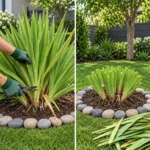
Most gardeners make a crucial mistake in November: they do nothing. The garden looks tired, frost has arrived, and the instinct is to let nature take its course. But for certain perennials, that dormant period is precisely when they need your intervention—not for aesthetics, but for survival and vitality.
The Strategy Behind the Cut
This isn’t about making your garden Instagram-ready for winter. It’s strategic plant management. When you cut back specific perennials in November, you’re essentially hitting a reset button. You’re eliminating disease reservoirs, evicting overwintering pests, and redirecting the plant’s energy from maintaining dead foliage to strengthening roots. Come spring, while your neighbor’s neglected perennials struggle to emerge through last year’s rotted debris, yours will surge upward with renewed vigor.
The Seven That Demand Attention
Peonies are disease magnets by November. Those blackened stems aren’t just ugly—they’re fungal hotels. Cut them to two inches and burn or trash the debris. Your reward? Those spectacular late-spring blooms that make passersby stop in their tracks.
Hostas turn to slime after frost, creating a perfect slug sanctuary. That soggy foliage pressed against the crown invites rot. Trim everything to ground level now, and spring will deliver those architectural leaves without the battle scars.
Daylilies are famously indestructible, which makes gardeners complacent. But leaving brown foliage invites fungal issues that compromise next year’s performance. A November trim to four inches keeps them genuinely thriving, not just surviving.
Bee balm is the poster child for powdery mildew problems. If you’ve ever grown it, you know that white coating all too well. Cutting it back hard in November—just a few inches—breaks that vicious cycle. You’re not just preventing disease; you’re ensuring the pollinators actually have healthy flowers to visit next summer.
Phlox follows the same mildew playbook. November cleanup means those gorgeous summer blooms won’t emerge from underneath a layer of fungal spores. Cut to the ground, remove everything, and let air circulation do its work.
Catmint gets leggy and chaotic by fall. That casual, cottage-garden sprawl looks charming in June but turns ratty by November. Cut it back to three inches, and you’ll get compact, bushy growth that actually looks intentional next season.
Yarrow stands stubbornly through fall, which seems admirable until those stems become brittle winter hazards. Two inches above soil level is all you need. This tough perennial doesn’t need coddling—just a clean slate.
What You’re Actually Preventing
The real value of November pruning isn’t immediately visible. You’re preventing:
- Fungal spores from overwintering in dead tissue
- Pest larvae from finding shelter in hollow stems
- Crown rot from decomposing foliage trapping moisture
- Energy waste as plants try to maintain dead growth
You’re essentially doing targeted preventive medicine. It’s far easier than dealing with diseased, pest-ridden plants trying to recover in spring.
The Contrarian Approach: What to Leave Alone
Here’s where restraint matters. Not everything should be cut. Coneflowers, black-eyed Susans, and ornamental grasses earn their keep all winter. Their seed heads feed birds during lean months. Their structure creates visual interest when everything else is brown. Their hollow stems house beneficial insects.
The key is knowing which plants are winter assets and which are winter liabilities. Cutting everything is lazy gardening disguised as diligence.
The Practical Reality
November pruning takes maybe an hour for an average garden. You need sharp, clean shears and a trash bag—skip the compost pile for disease-prone material. Pick a dry, mild day when stems aren’t frozen solid. That’s it.
The payoff comes in April and May when your perennials emerge clean, strong, and ready to perform. While others are cleaning up winter mess and nursing struggling plants, you’ll be watching healthy growth unfold exactly as it should.
The Bigger Picture
This kind of seasonal maintenance represents a shift in how we think about gardening. It’s not about constant fussing or Instagram-worthy moments. It’s about strategic interventions at the right time—doing the work when it matters most, not when it’s most visible.
Your November garden may look bare and stark after pruning. But underneath, you’ve created optimal conditions for spring success. Sometimes the best gardening happens when no one’s watching, in months when the work seems pointless. That’s precisely when it matters most.