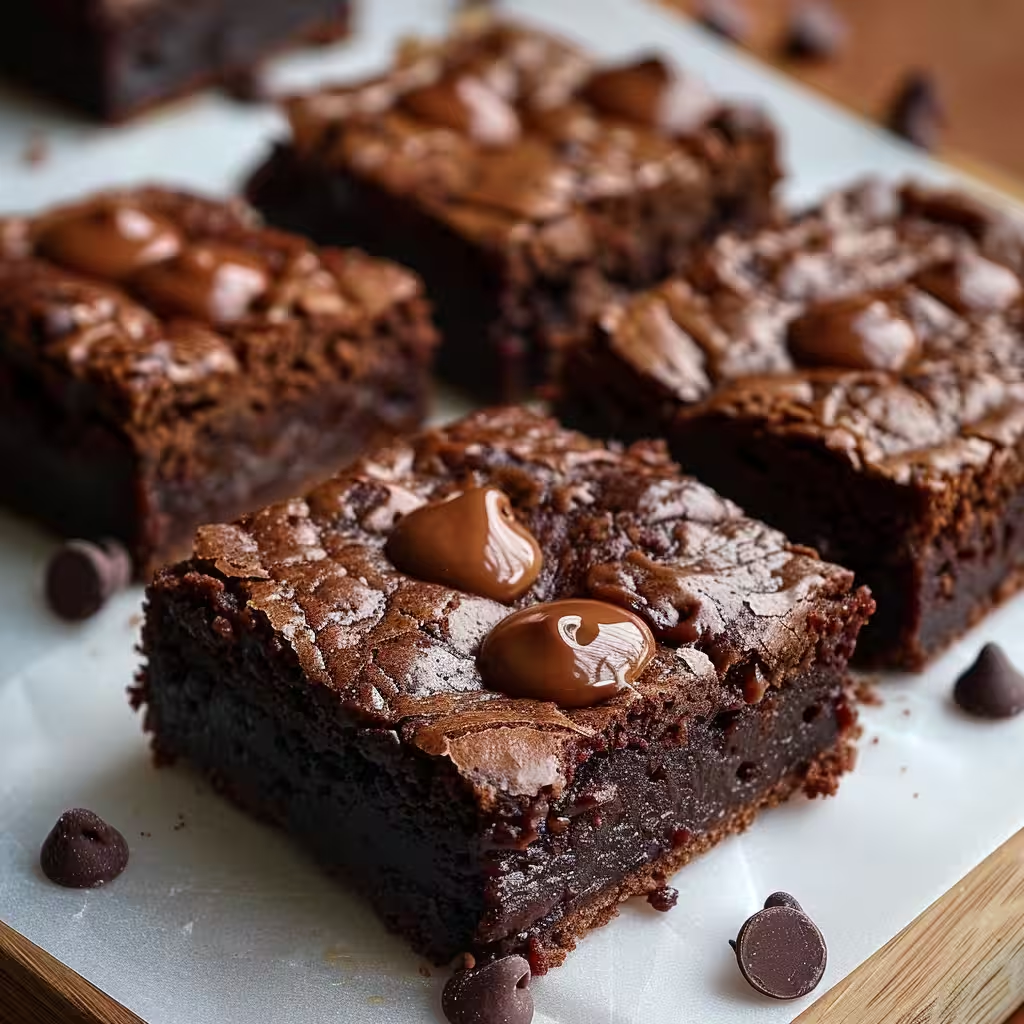
This extraordinary German Chocolate Pecan Brownie represents the ultimate achievement in layered confectionery, masterfully fusing the intense, fudgy structure of a high-ratio chocolate brownie with the creamy, praline-like sophistication of classic German chocolate cake frosting. This culinary event transcends the category of simple bake sale square; it is a meticulously engineered dessert monolith, delivering an unparalleled study in textural and thermal contrasts. The genius of this composition lies in its architecturally sound layering: a dark, dense chocolate base providing the requisite bitterness and chewiness, crowned by a rich, glossy custard matrix that perfectly suspends the caramelized crunch of pecans and coconut. This recipe ensures bakery-level decadence through the precise execution of foundational baking and confectionery principles.
The Art of Confectionery Layering and Heritage
This German Chocolate Pecan Brownie is a triumph of dessert hybridization, celebrating the iconic American invention—the German Chocolate Cake (named for its chocolate type, developed by Samuel German, not its national origin)—reimagined within the universally beloved format of the fudge brownie. The artistry is found in the dual texture: the brownie provides the smooth, molten chocolate interior, while the topping delivers the contrasting sticky, granular chew. This is a deliberate exercise in The Architecture of Taste, where the bittersweet notes of the dark base provide the grounding element, against which the intense sweetness of the caramelized topping can truly shine, creating a full-spectrum flavor experience that satisfies both the purist and the enthusiast.
Understanding the Science of Fudgy Integrity and Custard Stabilization
The success of this two-part structure is rooted in precise chemical control.
The Fudgy Base (Hydro-Lipid Matrix):
The superior fudge quality is achieved by utilizing a high-fat ratio (butter and chopped chocolate) relative to the flour. The method of melting the chocolate and butter together creates a foundational hydro-lipid emulsion that traps moisture. Crucially, the combination of granulated sugar (for the desirable brittle crust) and light brown sugar (for increased hygroscopy and chewiness via molasses) ensures the brownie maintains its dense, moist, and characteristically fudgy center even when baked at 350∘F.
The Custard Topping (Thermal Transformation):
The topping is a highly stabilized confection achieved through controlled heating. The mixture of evaporated milk, sugar, and egg yolks is cooked over medium heat until the egg proteins coagulate and form a thickened, stable custard matrix. This process, which occurs in the range of 80∘C to 85∘C (approximately 175∘F to 185∘F), ensures the topping sets firmly upon chilling, creating a glorious, sticky, yet structurally stable layer that perfectly encases the coconut and pecans.
Ingredients
The Fudgy Chocolate Monolith Base:
- 1 cup (2 sticks) unsalted butter: The essential lipid component for moisture and richness.
- 8 ounces semisweet or German baking chocolate, chopped: Provides the primary intense chocolate concentration.
- 1 1/2 cups granulated sugar: For structure and the delicate, crisp sugar cap.
- 1/2 cup light brown sugar, packed: For added moisture, chew, and subtle molasses notes.
- 4 large eggs, at room temperature: Essential for emulsification and achieving the classic fudgy density.
- 2 teaspoons vanilla extract: An aromatic potentiator.
- 1 cup all-purpose flour: The minimal necessary binding agent to maintain a fudgy texture.
- 1/2 teaspoon fine sea salt: Crucial for flavor amplification and balance.
- 1/4 cup unsweetened cocoa powder: For deep, secondary chocolate complexity.
The Decadent Coconut Pecan Topping:
- 1 cup evaporated milk: Provides concentrated creaminess and stability for the custard base.
- 3 large egg yolks, lightly whisked: The essential protein stabilizer for thermal setting.
- 1 cup granulated sugar: Contributes to the characteristic sticky sweetness of the praline-like layer.
- 1/2 cup unsalted butter: For added richness and glossy sheen.
- 1 teaspoon vanilla extract: For aromatic rounding.
- 1 1/3 cups sweetened shredded coconut: The primary textural and flavor component.
- 1 cup pecans, chopped and lightly toasted: Introduced for superior crunch and complex nuttiness.
Instructions
I. The Fudgy Monolith Construction (The Brownie Base):
- Preparation and Thermal Setup: Preheat your convection oven to 350∘F. Line the 9×13-inch pan with parchment paper, leaving generous overhang for flawless removal.
- Hydro-Lipid Emulsification: In a heavy-bottomed saucepan over controlled low heat, meticulously melt the butter and chopped chocolate. Stir gently until a perfectly smooth, homogenous emulsion is achieved. Remove from heat and allow to descend to a temperate state.
- Sugar and Emulsification Integration: Whisk both granulated and packed brown sugars into the melted chocolate mixture. Incorporate the room-temperature eggs sequentially, ensuring complete mixing after each addition to establish a stable batter foundation. Stir in the vanilla extract.
- Dry Matter Fold: In a separate vessel, whisk the flour, sea salt, and cocoa powder. Gently fold this dry blend into the wet emulsion until the final trace of flour disappears—crucial to prevent gluten over-development.
- Thermal Processing: Spread the batter evenly into the prepared pan. Bake for 22 to 28 minutes. The center must remain just set, indicating a molten interior. Cool completely on a wire rack to solidify the internal structure.
II. Thermal Transformation and Praline Matrix Formation (The Topping): 6. Custard Base Assembly: Combine the evaporated milk, whisked egg yolks, granulated sugar, and butter in a clean saucepan. 7. Controlled Coagulation: Cook the mixture over steady medium heat, stirring continuously. Maintain this thermal process for 8 to 12 minutes, until the mixture achieves the desired custard-like thickness, coating the back of a spoon without running. 8. Flavor and Texture Integration: Remove the stable custard from the heat source. Incorporate the vanilla extract, shredded coconut, and the highly desirable toasted pecans. Allow to cool slightly; the reduction in temperature is critical for achieving optimal viscosity.
III. Refrigeration and Structural Finalization: 9. Decadent Enrobing: Spread the coconut pecan topping evenly and generously across the fully cooled brownie base. 10. Structural Setting: Refrigerate the entire confection for a minimum of 45 minutes. This chilling period is mandatory to allow the egg proteins in the custard topping to fully set, guaranteeing clean, architecturally defined slices. Garnish optionally with a delicate chocolate drizzle or extra toasted pecans.
Professional Tips for Perfect Results
- Temperature Discipline: Ensure eggs are at room temperature. Cold eggs will shock the melted butter/chocolate mixture, causing the emulsion to break and leading to a denser, less fudgy brownie.
- Baking Vigilance: Do not overbake the brownie. The toothpick test should yield moist crumbs, not a clean stick. Overbaking turns fudge into cake and compromises the chewy texture.
- Custard Control: The topping must be stirred constantly to prevent the egg yolks from curdling or sticking to the bottom of the pan, which results in a grainy, unacceptable texture. Cook low and slow.
Troubleshooting Common Issues
- Grainy Topping: Caused by cooking the custard too quickly over high heat, causing the egg proteins to curdle. Cook at medium-low and monitor carefully.
- Dry/Crumbling Brownie: A direct result of overbaking. Reduce baking time by a few minutes in a subsequent attempt.
- Sliding Topping: Indicates the brownie base was not completely cooled before the warm topping was applied, or the chilling period was insufficient. The cold structure is non-negotiable.
Culinary Heritage and Significance
While the term “German” is misleading (referring only to a specific brand of chocolate), this dessert represents a cornerstone of American dessert tradition. It is a highly celebrated party dish due to its inherent richness and stability, making it ideal for large gatherings and gift-giving. The fusion of the deep chocolate flavor with the caramelized nuts and coconut positions it as a perfect treat for autumn and winter celebrations.

German Chocolate Pecan Brownies
Ingredients
Method
- Prepare the Baking Pan
- Preheat oven to 350°F. Line a 9 x 13-inch baking pan with parchment paper, leaving overhang on the sides for easy removal later. Lightly grease the parchment with cooking spray or butter to prevent sticking.
- Melt Chocolate and Butter
- In a medium saucepan over low heat, combine the unsalted butter with the chopped chocolate. Stir occasionally until completely melted and smooth. Be careful not to overheat. Remove the pan from heat and allow the mixture to cool slightly.
- Mix Wet Ingredients
- Whisk both granulated sugar and brown sugar into the melted chocolate mixture until well incorporated. Add the eggs one at a time, mixing thoroughly after each addition to ensure a smooth batter. Stir in the vanilla extract until combined.
- Incorporate Dry Ingredients
- In a separate bowl, whisk together the flour, sea salt, and cocoa powder. Gently fold this dry mixture into the wet chocolate mixture, stirring just until combined. Avoid overmixing as this can make the brownies tough.
- Bake the Brownies
- Spread the batter evenly into your prepared pan, smoothing the top with a spatula. Bake in the preheated oven for 22 to 28 minutes, or until a toothpick inserted in the center comes out with a few moist crumbs. The center should be just set. Transfer to a wire rack and allow to cool completely.
- Prepare the Coconut Pecan Topping
- Combine evaporated milk, egg yolks, granulated sugar, and butter in a saucepan. Cook over medium heat, stirring constantly with a wooden spoon or silicone spatula to prevent scorching. Continue cooking until the mixture thickens to a custard-like consistency, approximately 8 to 12 minutes.
- Finish the Topping
- Remove the custard from heat. Stir in the vanilla extract, shredded coconut, and toasted pecans until well combined. Allow the topping to cool slightly, which will help it thicken to a spreadable consistency.
- Assemble and Set
- Spread the coconut pecan topping evenly over the cooled brownies. Use an offset spatula to create a smooth, even layer. Refrigerate for at least 45 minutes to allow the topping to set properly before slicing into squares.
Notes
- For the best flavor, toast the pecans before adding them to the topping. Spread them on a baking sheet and bake at 350°F for 5-7 minutes until fragrant.
- The brownies can be stored in an airtight container at room temperature for 2-3 days or refrigerated for up to a week.
- Contrary to its name, German Chocolate isn’t from Germany – it was named after Samuel German, an American who developed a type of dark baking chocolate for Baker’s Chocolate Company.
- For cleaner cuts, use a sharp knife dipped in hot water and wiped clean between slices.