It is March 8, 2026, and if you are staring at a cold, gray fence or a neighbor’s lackluster siding, you are looking at a blank canvas. In the gardening world, “vertical space” is the most undervalued real estate you own.
A bare fence isn’t just an eyesore; it’s a missed opportunity for privacy, fragrance, and wildlife habitat. By planting the right climbers this March, you can turn a structural boundary into a “living wall” by mid-summer. Here are 10 stunning plants that specialize in high-speed transformations.
The “Sprint” Runners (Fastest Annuals)
If you need a screen right now, these annuals are your best bet. They grow from seed to 10 feet in a single season.
- 1. Morning Glories: These are the “speed demons” of the vine world. Their heart-shaped leaves and trumpet flowers can swallow a chain-link fence in weeks.
- Note: They are prolific self-seeders (see our earlier article!), so they may return next year on their own.
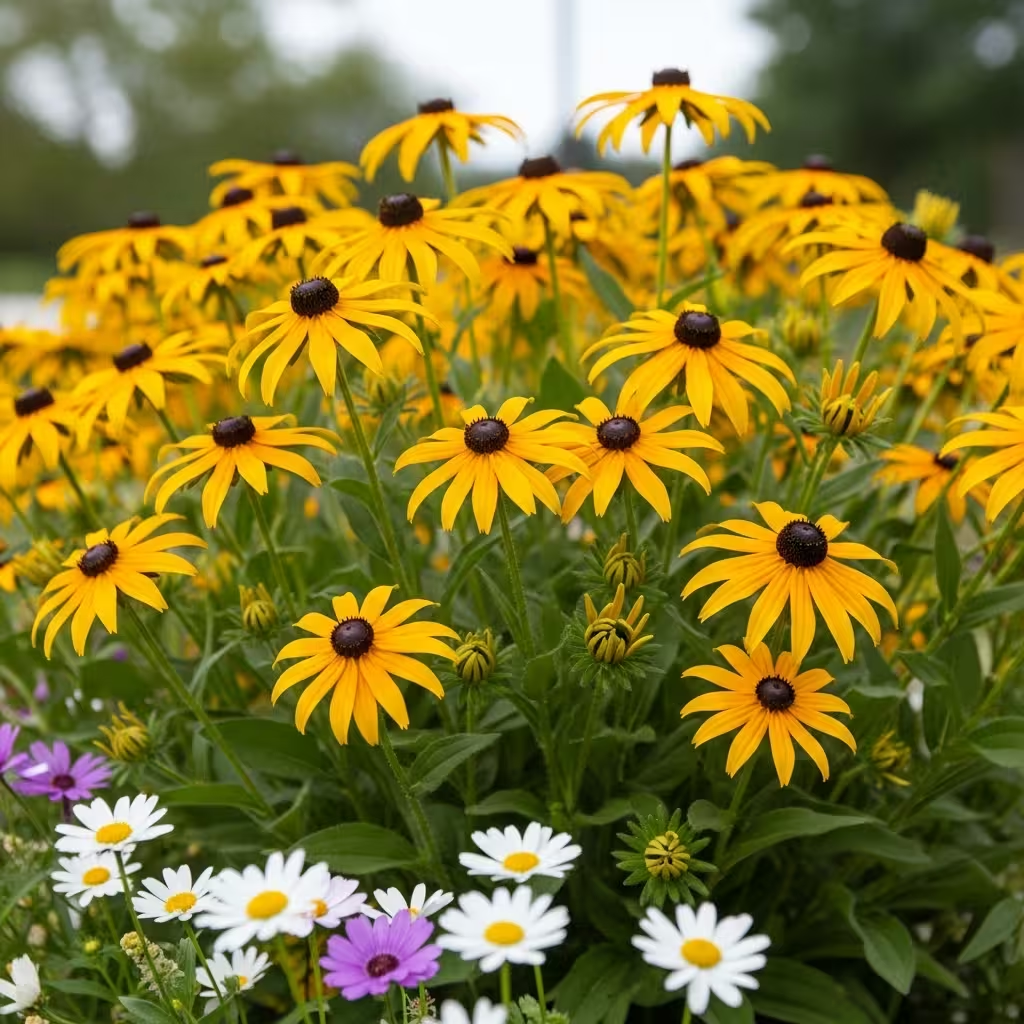
- 2. Black-Eyed Susan Vine (Thunbergia): A cheerful, fast-growing climber with bright orange or yellow flowers and distinct black centers. It’s much softer and less “aggressive” looking than Morning Glory.
- 3. Sweet Peas: March is the ultimate time to get these in the ground. They love the cool spring air and provide a fragrance that no candle can replicate.
- 4. Cup and Saucer Vine (Cobaea scandens): One of the most sophisticated annual climbers. It produces large, purple, bell-shaped flowers that look like they belong in a Victorian botanical sketch.
The “Permanent” Privacy Shield (Perennials)
If you want a solution that returns every year and gets stronger with age, look to these perennials.
- 5. Clematis (Group 3/Late Bloomers): If speed is the goal, choose Group 3 varieties like ‘Jackmanii’. You can hack them down to 12 inches every March, and they will reliably race back up to 8–10 feet by June.
- 6. Star Jasmine (Trachelospermum jasminoides): This is the gold standard for evergreen privacy. It keeps its glossy green leaves all winter and explodes in white, honey-scented flowers in early summer.
- 7. Honeysuckle (Native Varieties): Avoid the invasive Japanese versions and look for Lonicera sempervirens (Trumpet Honeysuckle). It grows fast, smells amazing, and is a literal magnet for hummingbirds.
- 8. Climbing Roses: While they require a bit of “training” (you have to tie the canes to the fence), a mature climbing rose provides a level of security and beauty that nothing else can match.
- 9. Virginia Creeper: If you don’t care about flowers but want dramatic color, this is it. It is a vigorous climber that turns a stunning, fiery crimson in the autumn.
- 10. Chocolate Vine (Akebia quinata): A unique, semi-evergreen climber with vanilla-chocolate scented flowers. It is incredibly hardy and can handle the “tough love” of a windy or exposed fence line.
The “Climb Strategy”: How They Hold On
I have to be your candid peer here: not all vines climb the same way. If you buy the wrong plant for your fence type, you’ll end up with a tangled mess on the ground.
Twining Vines (Honeysuckle, Jasmine, Morning Glory): These need something to wrap around. If you have a solid wood fence, you’ll need to add a bit of wire or a trellis for them to grab.
Tendril Climbers (Sweet Peas, Clematis): These have tiny “fingers” that reach out. They need thin supports like chicken wire or mesh.
Self-Clinging (Virginia Creeper): These have “suction cups.” They can climb a brick wall or a solid wood fence with zero help, but be warned: they are hard to remove once they’ve stuck!
March To-Do List for Climbers
- Check Your Support: A 10-foot vine is heavy, especially when wet from rain. Make sure your fence or trellis is sturdy before you plant.
- Soil Prep: Dig a hole twice as wide as the pot. Mix in some compost and a handful of bone meal to encourage deep, strong roots.
- The “Lean”: When planting against a fence, don’t put the plant right against the wood. Plant it about 12 inches away and lean the plant toward the fence. This ensures the roots get plenty of rain and room to grow.
Your fence shouldn’t look like a construction site boundary. With a few well-placed climbers this month, you can turn that gray line into a vertical paradise that adds value and beauty to your home.