The first bite of a proper lemon bar should hit you with a bright punch of acidity, followed immediately by rich, buttery sweetness. Too often, citrus bars wander into sponge cake territory, turning fluffy and dry rather than dense and satisfying. These bars dodge that trap entirely by keeping the crumb rich and delightfully chewy.
By combining melted butter directly with granulated sugar, fresh lemon juice, and citrus zest, the batter stays tight and fudgy without needing electric mixers. You mix the wet base in one bowl, gently fold in the dry ingredients, and smooth it into the pan.
With roughly twenty minutes of oven time, this recipe delivers an impressive bakery-style treat using everyday kitchen staples. Top the cooled bars with a two-ingredient citrus glaze, let it form a delicate crust, and slice them into clean squares for afternoon coffee or weekend gatherings.
Pull the bars when the edges are set and a toothpick inserted in the center comes out with a few moist crumbs, never completely bone-dry.
Why These Lemon Bars Stay Chewy Instead of Cakey
Traditional yellow cakes rely on creaming room-temperature butter with sugar to trap air pockets, resulting in a light and airy crumb. In this recipe, you whisk melted butter with the granulated sugar and eggs instead. Melting the butter limits aeration and keeps the batter dense, giving you that signature blondie chew.
Omitting baking powder or baking soda is another deliberate choice that protects the texture. Chemical leaveners would cause the batter to puff and dome like snack cake. Without them, the flour and butter bake into a flat, uniform bar with tender edges and a rich center.
Finally, gentle mixing keeps gluten development to an absolute minimum. Folding the flour and salt in just until the dry pockets vanish guarantees a melt-in-your-mouth bite rather than a tough, rubbery square.
The Power of Fresh Lemon Juice and Zest
Bottled lemon juice simply cannot duplicate the punch of a fresh lemon in this batter. The essential oils tucked inside the yellow zest carry the purest citrus aroma, cutting cleanly through the richness of the melted butter.
When you grate your lemon, run your microplane gently over the fruit so you collect only the fragrant yellow exterior. Avoid the bitter white pith directly underneath, which can add an unpleasant astringent note to the finished dessert.
Whisking the zest directly into the warm melted butter and sugar helps extract those aromatic oils throughout the entire batter. That fragrance carries over into the bake, ensuring every square tastes genuinely sunny rather than artificially sour.
Choosing the Right Pan and Parchment Setup
The recipe calls for an 8-inch square metal baking pan, and sticking to metal makes a noticeable difference in your bake. Metal conducts heat rapidly and evenly, allowing the perimeter of the blondies to set cleanly while keeping the middle soft.
Glass and ceramic baking dishes absorb and retain heat much more sluggishly. If you bake this batter in glass, the corners often overcook before the center loses its raw batter consistency. A standard light-colored metal pan gives you predictable, even results.
Line the pan with a sheet of parchment paper, leaving a small overhang on two opposite sides. This simple sling lets you lift the entire baked and glazed block out onto a cutting board without scratching your pan or breaking the first corner square.
Spotting the Perfect Doneness in the Oven
Baking at 350°F moves quickly, with the pan ready in just 18 to 24 minutes. Keep a close watch around the 18-minute mark because overbaking will dry out the moisture that makes these bars so appealing.
Look for edges that appear lightly matte, slightly pulled from the parchment, and pale golden. When you insert a wooden toothpick into the center, it should not emerge completely clean or wet with liquid batter.
You want to see a few moist crumbs clinging to the tester. Those soft crumbs indicate that the residual heat will finish setting the crumb as the pan rests on your counter, preserving that dense, fudgy bite.
Mastering the Thick Citrus Glaze
The glaze requires just three-quarters of a cup of powdered sugar and one to two tablespoons of lemon juice. Because powdered sugar absorbs liquid rapidly, start by stirring in one tablespoon of juice before adding more.
You are aiming for an opaque, spreadable consistency that holds its shape slightly when drizzled from a spoon. If the mixture is too runny, it will soak straight into the blondies like syrup instead of forming a crisp, candy-like cap.
Never pour glaze over warm bars. Wait until the slab is completely cooled to room temperature so the glaze stays sitting cleanly on top, setting into a smooth shell that slices with clean, sharp edges.
Slicing, Serving, and Storage Suggestions
Once the glaze has set to a dry, matte finish, use the parchment handles to lift the blondie block onto a flat cutting board. A long chef's knife works best for portioning. Wipe the blade with a clean, damp paper towel between strokes to keep the glaze edges pristine.
For an afternoon snack or potluck platter, cut the slab into sixteen neat two-inch squares. They hold up well alongside hot black tea, iced cold brew, or fresh berries.
Store any leftover bars in an airtight container at cool room temperature. Placing a sheet of wax paper or parchment between layers keeps the glaze from sticking together over time.
Lemon Blondie Troubleshooting and Common Questions
Why did my glaze melt into the bars?
Spreading the glaze while the baked slab is still slightly warm causes the powdered sugar to dissolve into liquid. Always allow the pan to cool completely to room temperature before glazing.
Can I use an electric hand mixer for the batter?
You can, but it is unnecessary and risks overworking the flour. A simple hand whisk and silicone spatula are all you need to keep the crumb tender and dense.
How long does it take for the glaze to firm up?
Depending on the humidity in your kitchen, the glaze typically sets within 20 to 30 minutes. Once the top feels dry to a gentle fingertip tap, you can slice cleanly.
How should I test for doneness without a toothpick?
A thin wooden skewer or paring knife tip works equally well. Look for set outer edges and a center that yields damp crumbs rather than liquid batter.
Chewy Glazed Lemon Blondie Bars Recipe
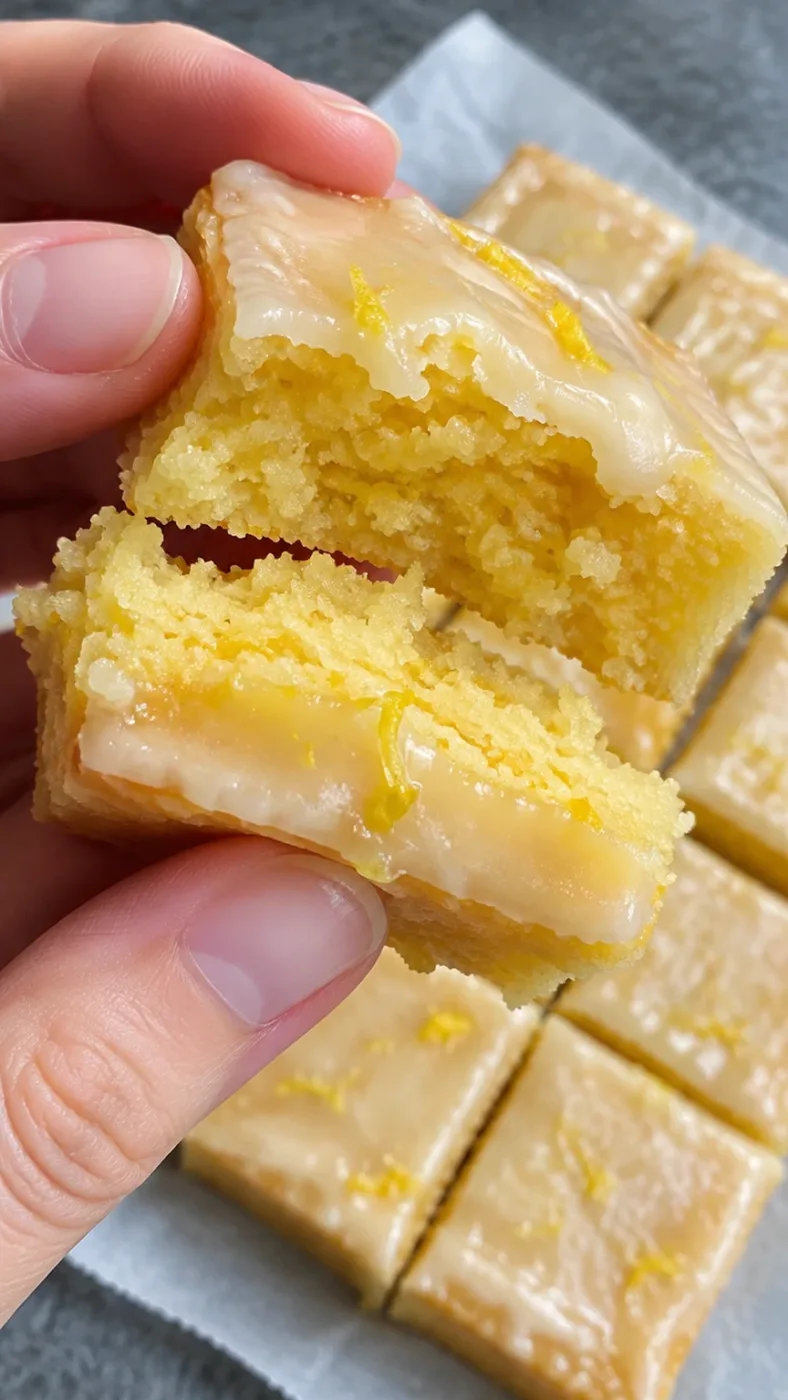
Chewy Glazed Lemon Blondie Bars
Ingredients
Method
- Heat the oven to 350°F. Line an 8-inch square metal pan with parchment.
- Whisk melted butter, granulated sugar, eggs, 2 tablespoons lemon juice, and the zest. Fold in the flour and salt just until combined.
- Spread the batter evenly in the pan. Bake 18–24 minutes, until the edges are set and a toothpick comes out with a few moist crumbs. Cool completely.
- Whisk the powdered sugar with enough remaining lemon juice to make a thick but spreadable glaze. Spread over the bars and let it set before slicing.


