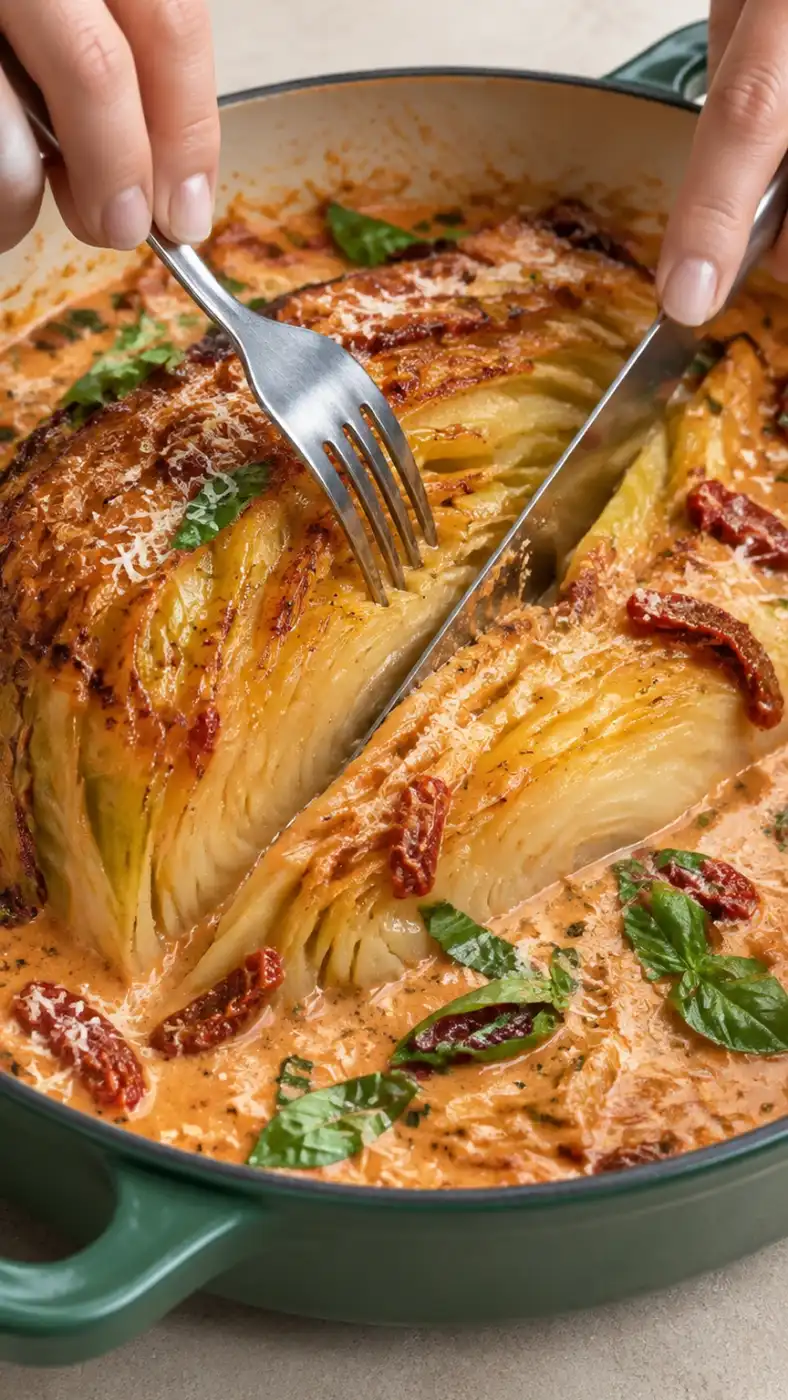
Cabbage rarely gets the center-stage respect it earns on the dinner table. Most home cooks shred it raw for slaws or boil it down until it loses its character, missing out on just how sweet and tender dense cabbage leaves become when given patient heat.
This recipe applies the beloved combination of minced garlic, sun-dried tomatoes, rich cream, and salty Parmesan directly to seared cabbage wedges. The result turns a humble winter staple into a rich, spoonable dish that converts even stubborn vegetable skeptics.
By browning the cut surfaces in butter first, you build a foundation of deep, nutty caramelization before the wedges simmer to a melting, fork-tender texture right in the skillet.
Leave the core attached when slicing the cabbage into wedges so the leaves stay intact while searing and braising.
Why Browning and Braising Unlocks Sweetness in Cabbage
Raw green cabbage carries a firm bite and a subtle peppery edge that softens dramatically under prolonged heat. Giving each cut face of the wedge direct contact with hot butter sparks the Maillard reaction, yielding a caramelized crust packed with savory depth.
Once browned, the cabbage finishes cooking covered in a mixture of vegetable broth and heavy cream. The trapped steam breaks down the dense fibrous ribs, transforming tough layers into silky ribbons that drink up the seasoned braising liquid.
Essential Ingredients for a Balanced Pan Sauce
The success of this dish lies in counteracting rich dairy with vibrant acidity. Chopped sun-dried tomatoes bring a sharp, tart brightness that balances the heavy cream and butter, preventing the sauce from feeling cloying.
Minced fresh garlic introduces aromatic warmth, while freshly grated Parmesan melts smoothly into the warm liquid at the end to body up the pan juices. A scattering of torn basil leaves adds a peppery freshness right as the pan leaves the stove.
Selecting the Right Skillet for One-Layer Braising
Cookware choice makes a notable difference when searing dense vegetables. A wide, heavy-bottomed skillet—such as an enameled cast iron braiser or heavy stainless steel pan—holds onto steady heat so the wedges brown deeply without burning.
Surface area is equally critical. You need a pan wide enough to let all six wedges rest flat in a single layer. Stacking the wedges crowds the pan, trapping moisture too early and causing the leaves to steam instead of developing that golden, seared crust.
Mastering the Wedge Cut and Pan Searing
To prepare your cabbage, pull away any bruised outer leaves, but leave the root intact. Cut directly down through the center of the stem to split the head in half, then slice each half into three wedges. Keeping a portion of the core on every piece keeps the leaves secured during searing.
Season each wedge generously with salt and pepper before searing. Let the wedges sit undisturbed in the foamy butter until you achieve a deep amber color across both cut sides, then move them to a plate while you assemble the sauce.
After sautéing the garlic and sun-dried tomatoes, pour in the broth and cream. Return the wedges to the pan, cover tightly with your lid, and maintain a gentle simmer until the ribs yield completely to a fork.
Keys to Perfectly Tender Melting Cabbage
Keep the heat dialed to low or medium-low once the lid goes on. Heavy cream can separate if boiled rapidly; a calm, steady simmer allows the sauce to reduce gently while basting the vegetable.
Test for doneness by inserting a fork into the thickest section of the core. There should be practically zero resistance. If the core feels firm, replace the lid and give the wedges another five minutes on the burner.
When adding the grated cheese, tilt the skillet slightly and stir the Parmesan directly into the simmering sauce. Ladle the thickened sauce over the browned ridges of each wedge right before scattering the fresh basil on top.
Frequently Asked Questions
Can I use red cabbage instead of green cabbage?
Standard green cabbage works best for this recipe because of its tender structure and natural sweetness. Red cabbage takes substantially longer to soften and releases pigments that turn the cream sauce a muted purple-gray.
How do I know when the cabbage wedges are finished cooking?
The wedges are ready when a fork or knife glides through the thick core ribs near the base without pushback, which typically takes between 25 and 35 minutes of gentle braising.
What is the best way to serve melting cabbage?
These creamy wedges make a hearty side dish alongside roast pork, steak, or roasted chicken, but they are equally satisfying served in shallow bowls with crusty bread for dipping.
Can I prepare the cabbage wedges in advance?
You can cut the cabbage into wedges and store them in an airtight container in the refrigerator up to 24 hours ahead, keeping them dry until you are ready to sear.
Marry Me Melting Cabbage Recipe
Bestfeed
Marry Me Melting Cabbage
Turn green cabbage into a tender, savory side with this Marry Me Melting Cabbage recipe featuring garlic, cream, sun-dried tomatoes, and Parmesan.
Cut the cabbage into 6 wedges through the core so the leaves stay attached. Season with salt and pepper.
Searing
Heat 2 tablespoons butter in a wide heavy skillet. Sear the wedges on both cut faces until deeply golden, then transfer to a plate.
Sauce
Melt the remaining butter in the pan. Stir in the garlic and sun-dried tomatoes, then add the broth and cream and bring to a gentle simmer.
Braise & Finish
Return the wedges, cover, and braise gently for 25–35 minutes, until fork-tender. Stir the Parmesan into the sauce, spoon it over the wedges, and finish with basil.
Notes
Use a wide, lidded skillet so the wedges sit in one layer.