Designing a container garden is a lot like choosing roommates. If you pair a water-loving “party animal” with a drought-tolerant “hermit,” one of them is going to be miserable. The secret to those lush, magazine-worthy pots isn’t just color coordination—it’s plant chemistry.
By matching plants with identical light, water, and nutrient needs, you create a mini-ecosystem where both species thrive. Here are 10 “best-ever” pairings that look stunning and grow even better together.
The Sun Seekers (Full Sun Favorites)
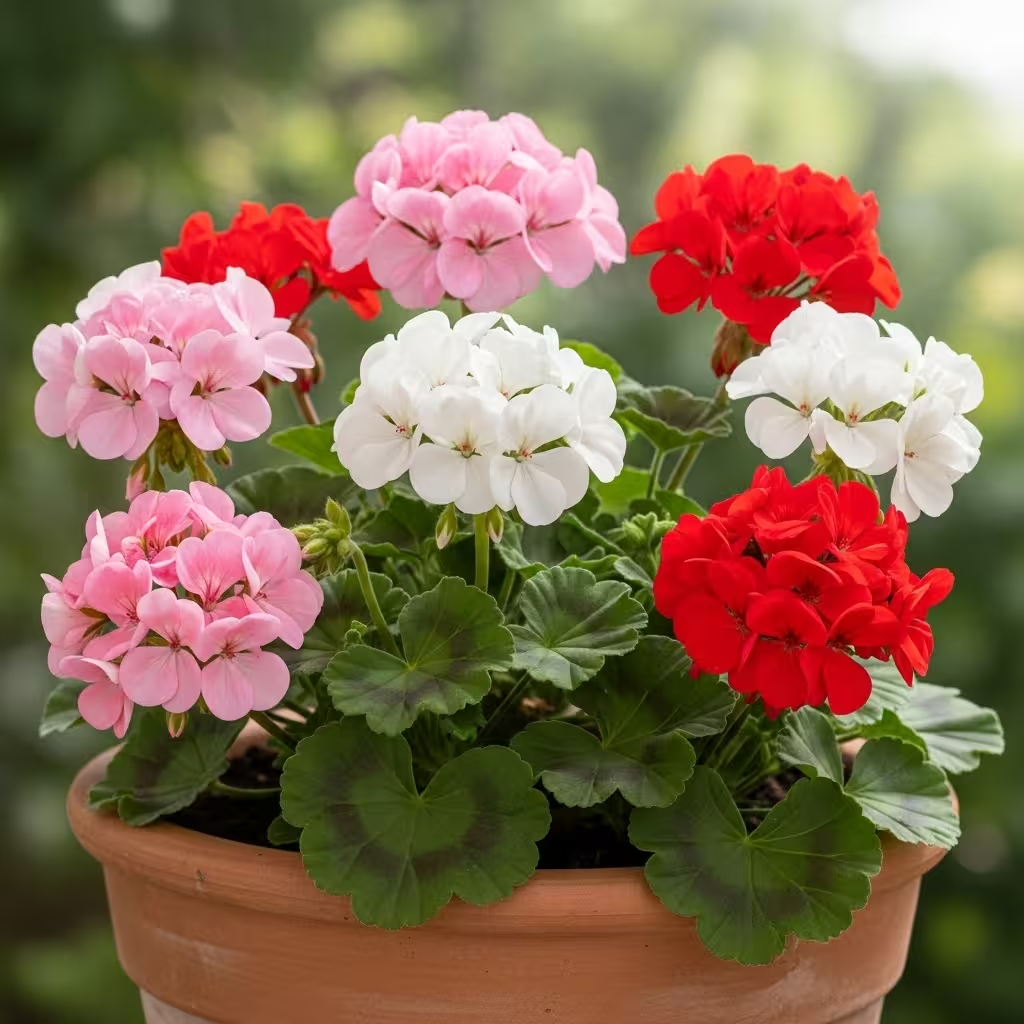
1. Geraniums & Lobelia This is the classic “fire and ice” pairing. The upright, bold structure of the Geranium provides the height (the “Thriller”), while the cascading, electric blue of the Lobelia softens the edges of the pot (the “Spiller”).
- Why it works: Both love the sun, but the Lobelia helps shade the soil, keeping the Geranium’s roots slightly cooler.
2. Petunias & Sweet Potato Vine (Ipomoea) If you want a pot that overflows onto the patio, this is the duo. Petunias provide non-stop color, while the Sweet Potato Vine (especially the chartreuse variety) offers massive, lime-green foliage.
- Why it works: Both are “heavy feeders.” You can fertilize them aggressively, and they will both turn that food into explosive growth.
3. Lavender & Silver Falls Dichondra For a sophisticated, Mediterranean look, pair the silvery-purple spikes of Lavender with the shimmering, trailing stems of Dichondra.
- Why it works: Both are drought-tolerant. If you forget to water them for a few days, they won’t hold a grudge.
4. Lantana & Scaevola (Fan Flower) If your patio feels like the surface of the sun in July, this is your pair. Lantana thrives in intense heat, and Scaevola is one of the few trailers that won’t wilt when the temperature spikes.
- Why it works: They are both virtually “self-cleaning,” meaning you don’t have to spend your weekends deadheading spent blooms.
The Shade Saviors (Low Light Lovers)
5. Fuchsia & Creeping Jenny Fuchsias produce exotic, dangling blooms that look like ballerinas, while Creeping Jenny provides a bright, trailing carpet of gold.
- Why it works: Both love consistent moisture and dappled shade. The gold leaves of the Jenny pop beautifully against the deep pinks and purples of the Fuchsia.
6. Begonias & Caladiums This is a foliage-first pairing. Caladiums offer massive, heart-shaped leaves in pinks and whites, while Begonias provide waxy leaves and constant rose-like blooms.
- Why it works: Caladiums provide the “structure,” and Begonias fill in the gaps. Both grow from tubers and prefer the same humid, shady conditions.
7. Coleus & Impatiens Coleus is the king of “neon” foliage, while Impatiens provide simple, flat flowers that bloom in the darkest corners of the garden.
- Why it works: They have identical growth rates. One won’t out-compete the other; they’ll simply knit together into a solid wall of color.
Texture & Fragrance (The Sensory Duo)
8. Angelonia & Euphorbia ‘Diamond Frost’ Angelonia (Summer Snapdragon) provides tall, sturdy spires of purple or white. Euphorbia acts like “Baby’s Breath” for the garden, creating a cloud of tiny white flowers around the base.
- Why it works: It creates an airy, elegant look that doesn’t feel heavy or overcrowded.
9. Heliotrope & Sweet Alyssum This is the “fragrance pot.” Heliotrope smells like cherry pie or vanilla, while Alyssum smells like pure honey.
- Why it works: Heliotrope grows upright, while Alyssum hugs the soil and spills over the edge. Together, they create a scent cloud that will drift across your entire porch.
10. Pansies & Ornamental Kale (The February Special) Since it’s mid-February, this is the most timely pairing. Both can handle a light frost and even a dusting of snow.
- Why it works: The ruffled, architectural leaves of the Kale provide a dramatic backdrop for the “faces” of the Pansies. It’s the perfect way to get color into your garden before spring officially arrives.
3 Rules for Successful Pairing
- The “Vigor” Check: Never pair a slow-growing succulent with a fast-growing vine. The vine will physically “smother” the slower plant within weeks.
- The “Thirst” Match: Stick your finger in the soil. If one plant likes to be bone-dry and the other likes to be a swamp, one will die. Check your plant tags for “Moisture Needs.”
- Odd Numbers Rule: In design, groups of three usually look better than two. If you have two flower types you love, consider adding a third “neutral” plant like an ornamental grass or an ivy to tie them together.
You don’t need twenty different types of plants to make a beautiful container. By picking just two “power partners” that share the same biological needs, you’ll have a pot that looks better and lasts longer with half the effort.