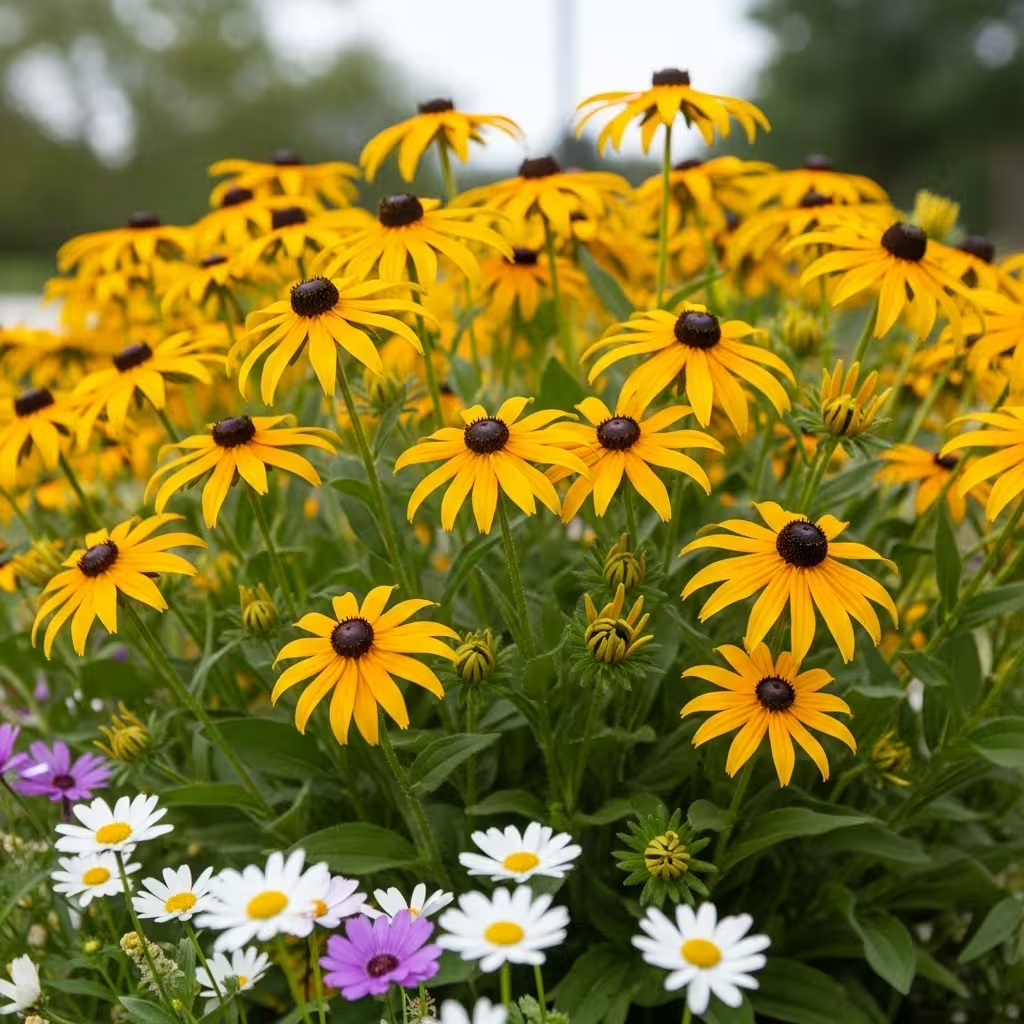
if you’ve noticed that some of your favorite garden “staples” are looking a little hollow in the center—or perhaps they just aren’t blooming with the same enthusiasm they did three years ago—nature is giving you a hint. Your plants are claustrophobic.
In the gardening world, March is the month of “The Great Divide.” Most perennials reach a point where their root systems become so congested they begin to choke themselves out. By stepping in now, while the plants are just waking up, you aren’t just “splitting” them; you are rejuvenating them.
Here are the 10 perennials that actually thrive when you take a shovel to them this month.
The “Why” Behind the Divide
Before we dig in, let’s be candid: it feels counterintuitive to chop a healthy plant in half. However, dividing in March serves three major purposes:
- Vigor: It stimulates fresh, youthful growth.
- Health: It improves airflow, reducing the risk of powdery mildew and rot.
- Economy: It’s the only way to get a $100 garden on a $0 budget. One mature Hosta can easily become four new plants.
The 10 March “Multipliers”
- 1. Hostas: These are the easiest to divide. If the “eyes” (the pointed tips) are just peeking through the soil, you can lift the whole clump and slice it into sections like a cake.
- 2. Daylilies: If your Daylilies have stopped blooming well, they are likely over-crowded. Dig the clump and pull the “fans” apart. They are incredibly resilient.
- 3. Ornamental Grasses: Many grasses develop a “dead hole” in the center as they age. March is the time to dig them up, discard the dead middle, and replant the vigorous outer ring.
- 4. Bee Balm (Monarda): This plant spreads via runners. If it’s wandering into areas it shouldn’t, dig up the outer edges and move them to a new sunny spot.
- 5. Sedum ‘Autumn Joy’: If your sedum flops over in the summer, it’s likely too top-heavy and crowded. Dividing every 3 years keeps the stems sturdy.
- 6. Shasta Daisies: These perennials are short-lived if not divided. Splitting them every two years in March ensures they keep coming back with those iconic white petals.
- 7. Coral Bells (Heuchera): Over time, Heuchera stems become “woody” and rise out of the ground. Digging and dividing allows you to replant the younger sections deeper in the soil.
- 8. Phlox (Tall Garden Phlox): Dividing Phlox now helps prevent the dreaded powdery mildew by ensuring each stem has plenty of “breathing room” come July.
- 9. Asters: These fall-bloomers need a spring “reset” to ensure they don’t get too leggy and sparse by the time they are ready to flower in September.
- 10. Siberian Iris: Unlike Bearded Iris (which prefer summer division), Siberian Iris love a March split. Use two garden forks back-to-back to pry the dense root mass apart.
The “Clean Cut” Strategy
I’d be doing you a disservice as your garden collaborator if I didn’t mention the “Sharp Tool” rule. Don’t try to “tear” these plants apart with your bare hands.
- The Tools: For Hostas and Daylilies, a sharp, flat-edged spade works best. For tough, woody roots (like grasses or Iris), a serrated garden knife or even an old kitchen bread knife is your best friend.
- The Replant: Never let the “new” divisions sit out in the wind and sun. Their exposed roots will dry out in minutes. Have your new holes dug before you start the surgery.
- The “Water-In”: Even if it’s a rainy March day, water your new divisions immediately. This collapses air pockets in the soil and “tucks” the roots into their new home.
Think of March division as a spa day for your garden. It’s a little stressful in the moment, but the plants will emerge stronger, more colorful, and—best of all—more numerous than ever before.