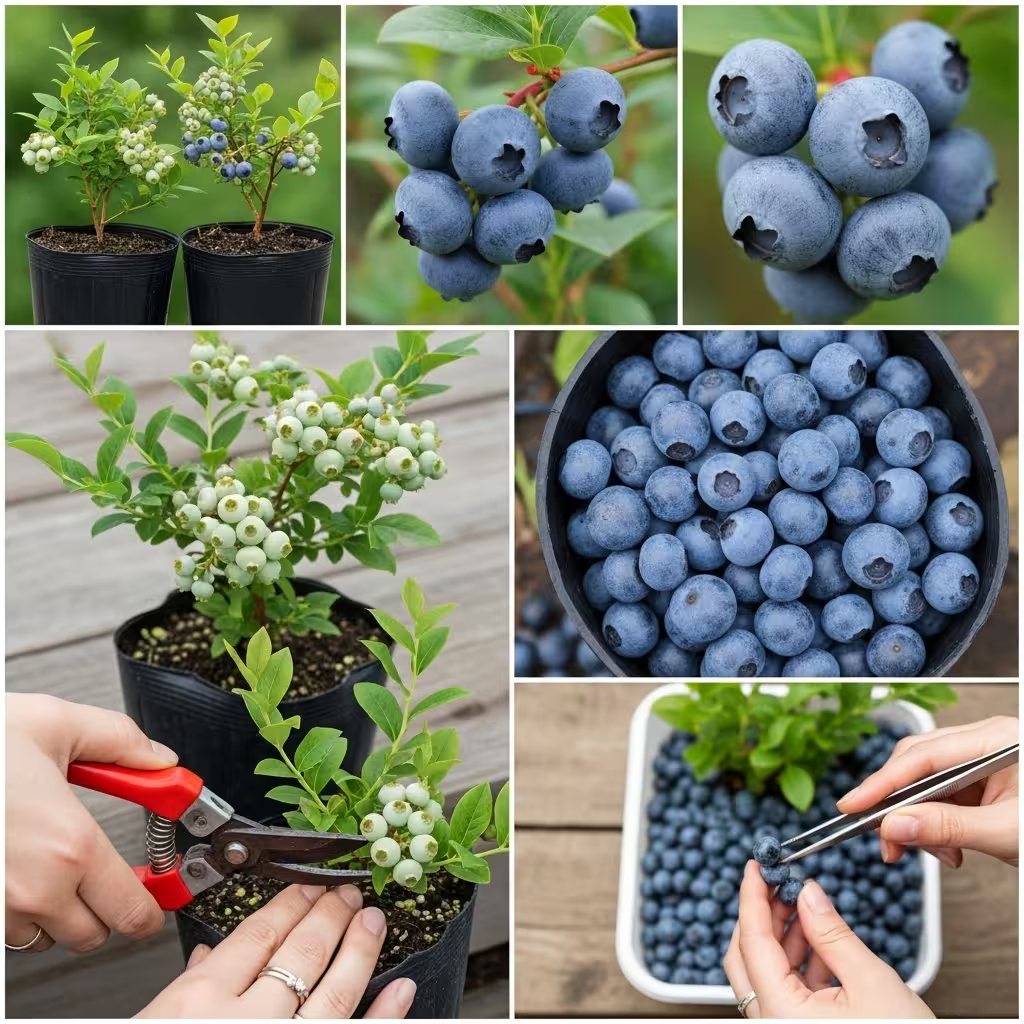
The pursuit of homegrown blueberries need not be constrained by traditional garden boundaries or soil limitations. Through strategic container cultivation, these antioxidant-rich jewels can flourish on urban balconies, rooftop gardens, and compact outdoor spaces, delivering the same exceptional flavor and nutritional benefits as their ground-planted counterparts.
Container blueberry cultivation represents more than space-saving convenience—it offers precise environmental control, enhanced mobility, and the opportunity to create optimal growing conditions regardless of your existing soil composition or climate challenges.
The Strategic Advantages of Containerized Berry Production
Container cultivation transforms blueberry growing from a soil-dependent endeavor into a controlled agricultural system with numerous benefits over traditional in-ground planting.
Soil chemistry mastery: Blueberries demand highly acidic growing conditions (pH 4.5-5.5) that are challenging to maintain in natural garden soils, particularly in alkaline regions. Container systems allow precise pH management and sustained acidic conditions without extensive soil modification.
Environmental flexibility: Portable containers enable seasonal positioning adjustments to optimize sun exposure, protect from extreme weather, and extend growing seasons through strategic placement during temperature fluctuations.
Pest and disease management: Elevated container positioning reduces exposure to soil-borne pathogens, ground-dwelling pests, and competitive weeds that commonly plague in-ground berry patches.
Resource efficiency: Concentrated care in containers allows for more precise water, nutrient, and amendment applications compared to dispersed ground plantings.
Cultivar Selection: Matching Genetics to Container Constraints
Success in container blueberry cultivation begins with selecting varieties specifically suited to restricted root environments and compact growing spaces.
Dwarf powerhouses: ‘Top Hat’ represents the gold standard for ultra-compact container culture, reaching only 18-24 inches in mature height while producing full-sized, flavorful berries. This naturally dwarf variety thrives in smaller containers without sacrificing fruit quality.
Semi-dwarf performers: ‘Sunshine Blue’ offers extended harvest periods with excellent self-fertility, making it ideal for single-plant container gardens. Its compact 4-6 foot mature size suits larger containers while providing substantial yields.
Specialty container series: The Bushel and Berry collection, including ‘Jelly Bean’ and ‘Peach Sorbet’, represents purpose-bred container varieties engineered for restricted root systems and aesthetic appeal in decorative containers.
Cold-hardy selections: For northern climates, half-high varieties like ‘Northblue’ and ‘Northcountry’ combine cold tolerance with manageable container size requirements.
Cross-pollination considerations: While many modern varieties offer self-fertility, planting multiple cultivars in separate containers can significantly increase berry yields and extend harvest windows.
Container Engineering: Building the Perfect Growing Environment
The foundation of successful container blueberry cultivation lies in selecting and preparing containers that support long-term plant health and productivity.
Volume requirements: Mature blueberry root systems demand substantial growing space—minimum 20-gallon capacity for full-sized varieties, with 15-gallon containers suitable for dwarf types. Inadequate container size leads to rapid root binding and declining plant vigor.
Dimensional specifications: Ideal containers measure 20-24 inches in both diameter and depth, providing adequate root expansion room while maintaining stability. Width proves more critical than depth, as blueberry roots spread laterally rather than growing deeply.
Drainage optimization: Multiple drainage holes (minimum 6-8 holes per container) prevent waterlogging conditions that rapidly kill blueberry plants. Consider adding drainage layers of gravel or broken pottery to enhance water movement.
Material considerations: Wooden half-barrels and large ceramic containers provide excellent insulation and moisture regulation, while plastic containers offer lightweight portability but require more careful moisture monitoring.
Substrate Formulation: Engineering Acidic Growing Media
Creating optimal growing substrates requires balancing drainage, acidity, nutrition, and organic matter content to replicate blueberries’ natural habitat conditions.
Professional-grade mixture:
- 40% Canadian sphagnum peat moss (natural acidification)
- 30% aged pine bark fines (drainage and structure)
- 20% coarse perlite or pumice (aeration)
- 10% aged compost or leaf mold (nutrition and biology)
pH management strategy: Target substrate pH between 4.8-5.2 for optimal nutrient availability. Regular pH monitoring with digital meters ensures sustained acidity levels throughout the growing season.
Organic matter integration: High organic content mimics forest floor conditions while providing slow-release nutrition and beneficial microbial activity essential for healthy root development.
Drainage verification: Properly formulated substrates should drain freely while retaining adequate moisture. Test by saturating the mix—excess water should flow out within minutes.
Installation and Establishment Protocols
Proper planting techniques establish the foundation for years of productive container blueberry cultivation.
Root system preparation: Gently tease apart circled roots from nursery containers to encourage outward growth into the new substrate. Severely pot-bound plants may require root pruning to stimulate new growth.
Depth considerations: Maintain the original soil line on the stem—planting too deeply can lead to crown rot, while shallow planting exposes roots to temperature fluctuations.
Watering protocol: Initial thorough saturation settles the substrate and eliminates air pockets around roots. Follow with consistent moisture maintenance during the critical establishment period.
Mulching strategy: Apply 2-3 inches of pine needles, shredded oak leaves, or pine bark chips to conserve moisture, suppress weeds, and gradually acidify the growing medium.
Environmental Management and Care Protocols
Optimizing growing conditions requires attention to light exposure, moisture management, nutrition, and seasonal care adjustments.
Light optimization: Position containers to receive 6-8 hours of direct morning sunlight with some afternoon protection during extreme heat. Insufficient light reduces flower formation and fruit quality.
Irrigation management: Maintain consistent soil moisture equivalent to a wrung-out sponge—never waterlogged but never completely dry. Container plants typically require more frequent watering than ground plantings.
Nutritional programming: Feed with acid-forming fertilizers designed for ericaceous plants. Apply granular organic fertilizer in early spring, followed by liquid feeding monthly during active growth periods.
Seasonal adjustments: Reduce watering frequency during dormancy while preventing complete substrate desiccation. Container plants require winter protection in zones where temperatures drop below 10°F.
Advanced Cultural Techniques
Maximize productivity and plant health through strategic pruning, training, and long-term management practices.
Pruning philosophy: Light annual pruning during dormancy removes weak growth, opens plant centers for air circulation, and stimulates productive new shoots. Avoid heavy pruning that reduces flowering potential.
Training considerations: Some vigorous varieties benefit from light staking or support structures, particularly when heavy fruit loads threaten branch integrity.
Root management: Every 3-4 years, root-bound plants benefit from repotting into fresh substrate or root pruning to maintain container cultivation viability.
Harvest Optimization and Quality Management
Understanding ripening patterns and harvest timing ensures maximum fruit quality and flavor development.
Ripeness indicators: Fully ripe blueberries develop deep blue coloration with slight softness and easily detach from stems. Premature harvesting significantly reduces sweetness and flavor complexity.
Harvest scheduling: Most varieties ripen over 4-6 week periods, requiring multiple harvests for peak quality. Early morning picking when temperatures are cool preserves fruit quality.
Post-harvest handling: Fresh blueberries maintain best quality when kept cool and consumed quickly, though they freeze excellently for long-term storage.
Long-term Sustainability
Container blueberry cultivation offers decades of productive potential when managed with attention to plant health, substrate renewal, and varietal performance monitoring.
With proper variety selection, container sizing, substrate management, and cultural care, containerized blueberry plants can match or exceed the productivity of ground-planted specimens while offering superior control over growing conditions. This approach democratizes premium fruit production, making it accessible to urban gardeners, renters, and anyone seeking fresh, homegrown berries regardless of their gardening space limitations.
The investment in quality containers, appropriate substrates, and consistent care pays dividends through years of abundant, flavorful harvests that rival anything available in commercial markets.