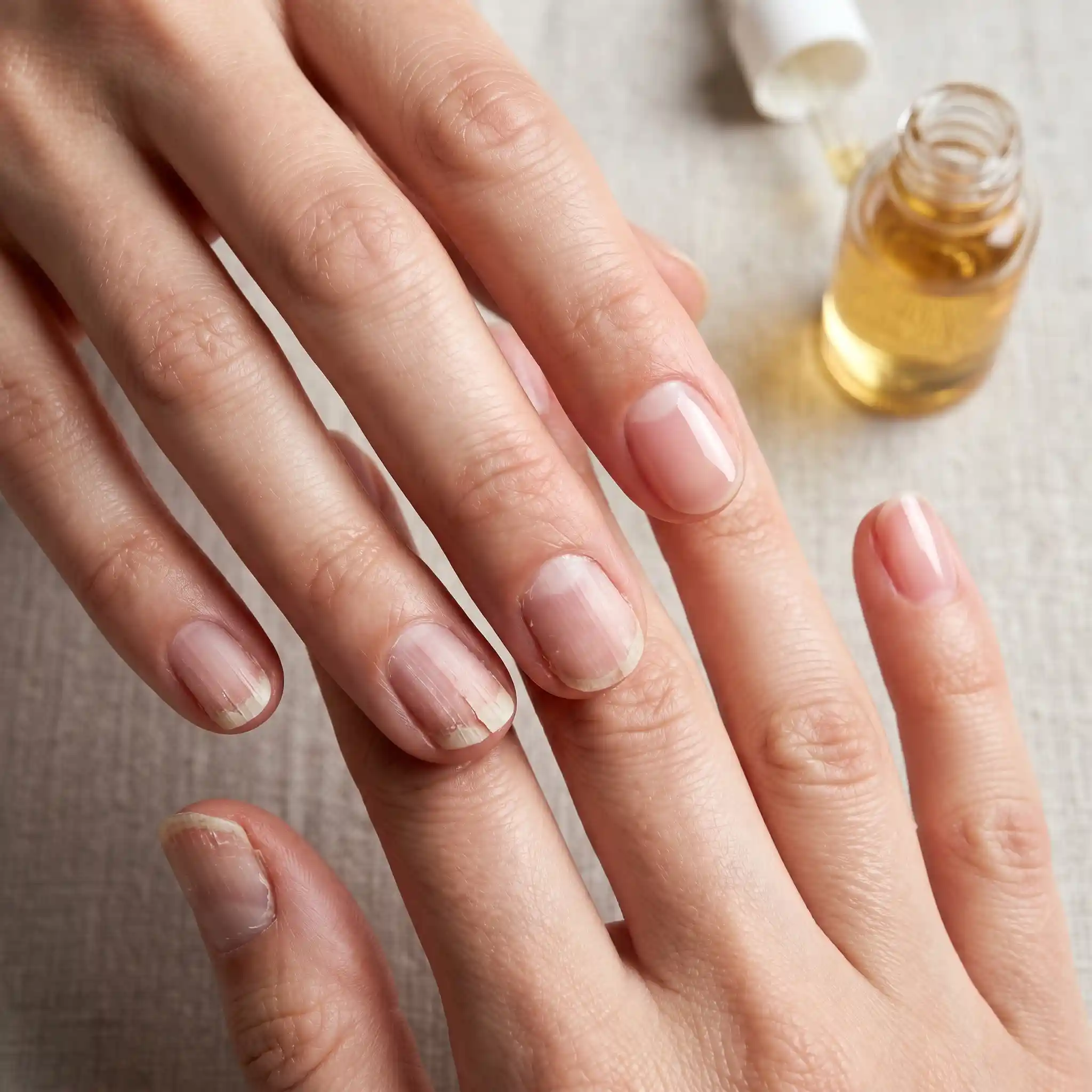
Nails tell on you. Long before you feel run down or realize your diet has slipped, your fingertips start showing it — a split along the edge, a flaky top layer, faint ridges running from cuticle to tip. It’s annoying cosmetically, but it’s also your body flagging that something needs attention.
The good news is that most nail damage isn’t as stubborn as it looks. With the right topical approach and a bit of consistency, the same nails that feel like paper today can be noticeably tougher within a month. Here’s what actually works and why.
What’s Causing the Damage in the First Place
Weak nails rarely have a single cause. The usual suspects overlap:
- Constant water contact — dishes, long showers, frequent handwashing. Each soak lifts moisture out of the nail plate.
- Harsh solvents — especially acetone-based polish removers, which dissolve natural oils along with the polish.
- Low biotin or iron — both play a direct role in how keratin (the protein nails are built from) forms.
- Dry, cold air — winter and air conditioning both pull humidity from the nail surface.
- Age — nails simply produce less of their own oils as the years add up, leaving them more prone to ridging and brittleness.
Knowing which of these applies to you helps you fix the underlying cause, not just patch the symptom.
The Topical Blend Dermatologists Keep Recommending
Cut through all the expensive nail products on the market and you keep arriving at the same two ingredients: jojoba oil and vitamin E.
It’s a surprisingly humble combination, but the science holds up.
Jojoba oil has a molecular structure that closely mimics the sebum your own skin produces, which is why it absorbs rather than sitting on top of the nail the way heavier oils do. That gives it a real pathway into the nail plate. Vitamin E, meanwhile, is a potent antioxidant that neutralizes the oxidative stress breaking down keratin from the inside.
Used together, they rehydrate, protect, and support the nail’s own rebuilding process. No strengthening polish or gel overlay is doing that kind of work underneath the surface.
How the Repair Actually Happens
When you massage the blend into the nail bed, the small jojoba molecules slip between the layers of the nail plate and deliver moisture where it’s needed. Vitamin E settles in and starts reducing oxidative damage to the keratin structure.
As the keratin matrix firms up, the visible signs of damage fade in order: dryness first, then brittleness, then splitting, and finally the ridges smooth out. This isn’t a bleaching or cosmetic coverup — it’s structural repair, which is why it takes a few weeks to show.
Applying It the Right Way
Twice a day, morning and night. That’s the rhythm.
Start with clean, dry hands. Use a dropper or a small brush to place a drop directly on each nail, covering the cuticle area too. Then — and this part matters — massage it in for about two minutes. The massage warms the area, pulls the oil deeper into the nail bed, and brings fresh blood flow to the root where new nail is forming.
Don’t wipe it off. Let it absorb while you move on to something else.
A Realistic Week-By-Week Timeline
Week 1 — Nails feel softer and less parched. Cuticles stop looking papery.
Week 2 — You’ll notice a subtle shine returning. Brittleness eases. Small splits stop getting worse.
Week 3 — Flaking slows down and eventually stops. Nails start to feel like they have some give instead of snapping.
Week 4 — Ridges soften and lay flatter. The overall look is smoother and stronger. New growth coming in will be visibly healthier than what’s growing out.
Stick with it past the four-week mark if your damage was severe. Long nails especially take time because you’re essentially waiting for healthy growth to replace the old compromised tip.
Other Ingredients Worth Looking For
If you’re shopping for a pre-blended serum rather than mixing your own, scan the label for:
- Keratin peptides — small, absorbable fragments of the same protein your nails are made of
- Aloe vera — soothes the cuticle area and reduces inflammation around damaged skin
- Sweet almond oil or argan oil — supportive moisturizers that pair well with jojoba
Avoid anything containing formaldehyde, formaldehyde resin, or toluene. They’re marketed as hardeners but make nails more brittle with repeated use.
Mistakes That Slow Your Progress
Inconsistent application. Twice a day for a weekend, then forgotten for three days, then picked up again — that’s not treatment, that’s cosplay. Set a phone reminder if you need to.
Going back to acetone removers. If you polish your nails, switch to acetone-free removers while you’re rebuilding.
Skipping gloves. Washing a sink full of dishes with bare hands basically undoes a full day of treatment. Cheap rubber gloves handle it.
Filing aggressively or in the wrong direction. File in one direction only with a fine-grit file, never a sawing motion.
Pairing the Treatment With Better Nail Habits
Topical care works faster when the rest of your routine stops working against it.
Keep water contact short when you can. Moisturize your hands every time you dry them. Keep nails trimmed to a length that isn’t fighting gravity — long nails magnify any weakness.
From the inside, make sure your diet has enough biotin (eggs, nuts, seeds), iron (leafy greens, red meat, lentils), and omega-3 fatty acids (fatty fish, flaxseed, chia). A simple biotin supplement can help if you suspect you’re coming up short, though food-first is always a better baseline.
Hydration matters more than people think. Dehydrated body, dehydrated nails.
When This Approach Is the Right Fit
The jojoba and vitamin E route works best for mild to moderate damage from the usual environmental and nutritional causes. If your nails are splitting because of winter, frequent handwashing, gel manicures, or a busy-life diet, this is a legitimate fix.
It’s not the right approach for:
- Fungal infections (look for discoloration, thickening, or separation from the nail bed)
- Psoriasis of the nails (pitting, oil-drop patches, crumbling)
- Visible damage after trauma to the nail matrix
Those cases need a dermatologist and likely a different treatment entirely.
When to Stop Self-Treating and See a Doctor
If you’ve been consistent with the routine for eight full weeks and your nails still aren’t improving — or worse, are getting more damaged — that’s a signal to get checked out. Ongoing nail problems can sometimes point to thyroid imbalances, iron-deficiency anemia, or other issues that a topical serum can’t address.
Seek care right away if you notice redness, swelling, pus, or pain around a nail. That’s an infection, not a cosmetic problem.
Keeping the Results Once You’ve Earned Them
Once your nails are back to looking the way you want them to, don’t stop entirely. Drop to one application a day — most people do it at night — and keep the rest of the habits in place.
Trim regularly. Keep acetone-free remover on hand. Wear gloves for anything wet or chemical. Keep eating well. That’s really the whole formula: treat the damage, then maintain the conditions that let nails stay strong.
A few minutes a day keeps the problem from coming back. That’s a fair trade for hands that finally look the way you want them to.