That tree stump in your yard has been taunting you for months—maybe years. Too expensive to grind out professionally. Too much work to dig up yourself. Too ugly to ignore. So it sits there, a weathered monument to procrastination, throwing off your entire landscape aesthetic.
What if I told you that stump could become your garden’s most unexpected showpiece? Not hidden, not removed—transformed into something genuinely beautiful that people will photograph and compliment.
Tree stump planters bypass all the misery of removal while creating unique focal points impossible to replicate with traditional containers. They’re conversation starters, budget-friendly projects, and surprisingly forgiving for gardeners at any skill level.
Here are nine flowers perfectly suited to stump planting, plus the strategy to make your transformation successful.
1. Petunias: The Reliable Cascaders
When you need guaranteed results, petunias deliver. These workhorses bloom relentlessly from spring through fall in practically every color combination imaginable—solids, stripes, veining, gradients.
Why they work: Trailing varieties naturally spill over stump edges, softening harsh lines and creating that “overflowing with life” effect. Their aggressive growth quickly covers rough bark texture.
Selection strategy: Mix upright and trailing types for dimension. Combine three colors in analogous schemes (purples-pinks-reds or yellows-oranges-corals) rather than rainbow chaos.
2. Begonias: Shade’s Secret Weapon
Stumps positioned under tree canopies pose lighting challenges for most flowering plants. Begonias thrive in exactly those conditions, offering lush foliage and consistent blooms where others struggle.
Why they work: Wax begonias tolerate shade brilliantly while providing glossy leaves that contrast beautifully with weathered wood. Tuberous varieties offer larger, showier flowers for maximum impact.
Maintenance reality: These are genuinely low-effort plants. Water when dry, ignore otherwise. They’ll perform all season without deadheading or fussing.
3. Lobelia: The Ethereal Spiller
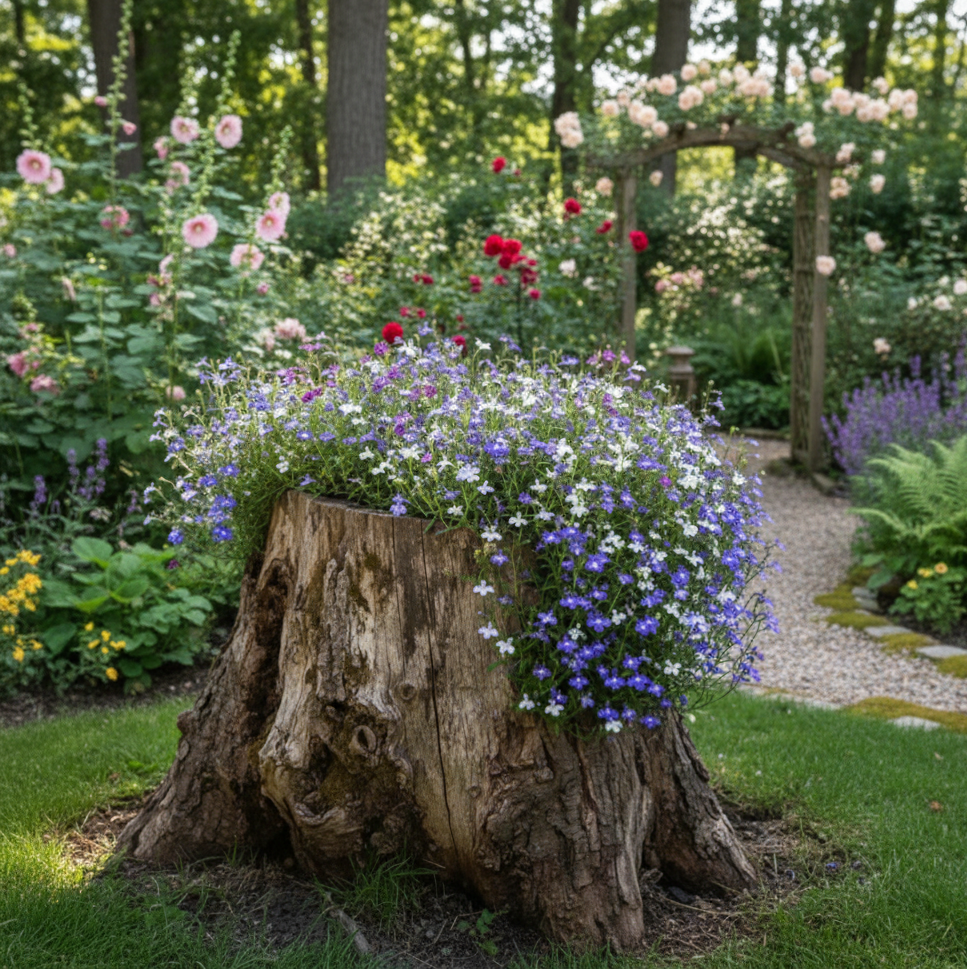
For gardeners seeking romance and whimsy over bold drama, lobelia creates soft, almost ethereal effects. Those tiny flowers in heavenly blues, purples, and whites seem to float in clouds around plantings.
Why they work: Lobelia’s delicate appearance belies surprising toughness. Plants naturally trail and weave through other flowers, creating integrated, professional-looking displays.
Design trick: Let lobelia colonize cracks and bark crevices around the stump’s base. This “escaping the planter” effect looks intentionally wild rather than contained.
4. Marigolds: Sunshine Personified
Bold, bright, and basically indestructible—marigolds bring intense warm colors that photograph spectacularly. They’re the antidote to dull, forgettable gardens.
Why they work: Marigolds handle heat, drought, and neglect without complaint. Their sturdy stems won’t flop, and they bloom continuously without deadheading (though removing spent flowers increases production).
Variety mixing: Combine compact French marigolds at stump edges with taller African varieties in the center for layered, dimensional plantings.
5. Fuchsias: Dangling Drama Queens
Shaded stumps become assets when you plant fuchsias. Those exotic, pendant blooms in pink-purple combinations look impossibly elegant—like something from a Victorian conservatory.
Why they work: Fuchsias actively prefer cool, shaded conditions where they’ll bloom prolifically. The dangling flowers create movement and vertical interest.
Hummingbird bonus: These plants function as pollinator magnets. Position your stump planter near seating areas for front-row bird watching.
6. Impatiens: The Shade Carpeting Expert
Impatiens offer something rare: genuinely abundant blooms in deep shade. They’ll transform the top of shaded stumps into solid color carpets.
Why they work: Dense growth covers soil quickly, creating finished looks within weeks. The flower-to-foliage ratio favors continuous color over greenery.
Color strategy: Resist mixing too many hues. Two complementary colors (white with pink, purple with coral) create sophisticated effects. Five random colors create visual chaos.
7. Nasturtiums: The Edible Adventurers
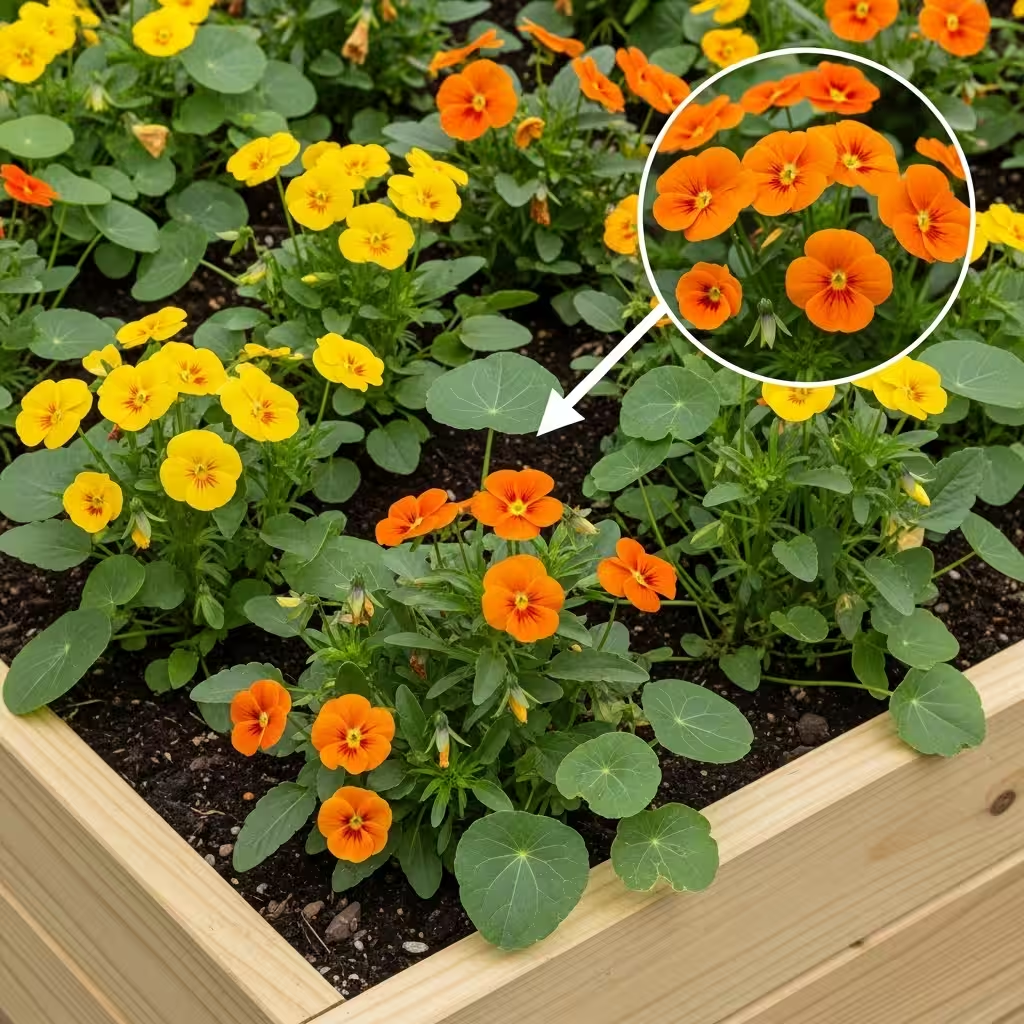
Nasturtiums bring personality and practicality. Those round leaves and trumpet flowers in hot oranges, yellows, and reds tumble enthusiastically over stump sides while offering culinary bonuses.
Why they work: Vigorous trailing growth creates that overflowing abundance you want. They’ll climb, sprawl, and generally colonize whatever space you give them.
Culinary angle: Flowers, leaves, and seed pods are all edible with peppery, watercress-like flavor. Your stump planter becomes an edible landscape feature.
8. Alyssum: The Fragrant Filler
Sometimes subtlety wins. Alyssum produces masses of tiny flowers that form soft, honey-scented clouds around bolder plantings.
Why they work: This is the perfect supporting player—filling gaps, softening edges, and adding fragrance without competing for attention. The effect is romantic and slightly wild.
Pairing suggestion: Use alyssum as living mulch around showier flowers. It suppresses weeds, retains moisture, and creates cohesive, professional-looking compositions.
9. Geraniums: The Indestructible Classics
Reliable, colorful, and tolerant of variable watering—geraniums are foolproof choices for stump planters that might not receive perfect care.
Why they work: Sturdy stems handle weather extremes. Blooms last weeks. Plants tolerate occasional drought. They’re difficult to kill through neglect.
Variety choice: Zonal geraniums (the classic upright type) offer bold, clustered blooms. Ivy geraniums trail beautifully for cascading effects.
Converting Stump to Planter: The Process
Step 1: Create planting cavity
Hollow out the stump’s center 6-8 inches deep. You don’t need precision—rough cavities work fine. Use a spade bit on a drill, a chisel, or just a sturdy screwdriver and hammer.
Step 2: Ensure drainage
Drill several holes through the cavity bottom and out the stump’s side. Standing water kills more container plants than any other issue. Err toward excessive drainage.
Step 3: Add soil properly
Fill with quality potting mix—not garden soil, which compacts in containers. The investment in good potting soil pays immediate dividends in plant performance.
Step 4: Plant thoughtfully
Position taller plants in the center, trailing varieties around edges. This creates natural-looking dimension. Water thoroughly after planting.
Step 5: Mulch strategically
Top-dress with shredded bark or cocoa hulls to retain moisture and finish the look. This also prevents soil from washing away during watering.
Design Principles for Success
Scale appropriately: Larger stumps can handle multiple flower types and color schemes. Small stumps look best with single varieties in one or two colors.
Consider surroundings: Match your planting style to nearby gardens. Cottage gardens support riot-of-color approaches. Modern landscapes need restraint.
Think seasonally: Plan for succession by mixing early and late bloomers, or commit to seasonal replanting (spring pansies, summer petunias, fall mums).
Maintenance access: Position stumps where you’ll actually water them. The most beautiful planting dies quickly from neglect.
The Satisfaction Factor
There’s something deeply satisfying about transforming problems into features. That stump went from landscape liability to legitimate focal point—without hiring contractors, renting equipment, or destroying your back digging.
Visitors will assume you planned it from the beginning. They’ll take photos. They’ll ask how you created such a charming feature. You can smile knowingly and explain that sometimes the best design solutions involve working with what you’ve got rather than fighting against it.
Your tree stump just became the most interesting planter in the neighborhood. And all it took was some good soil and a few flats of flowers.